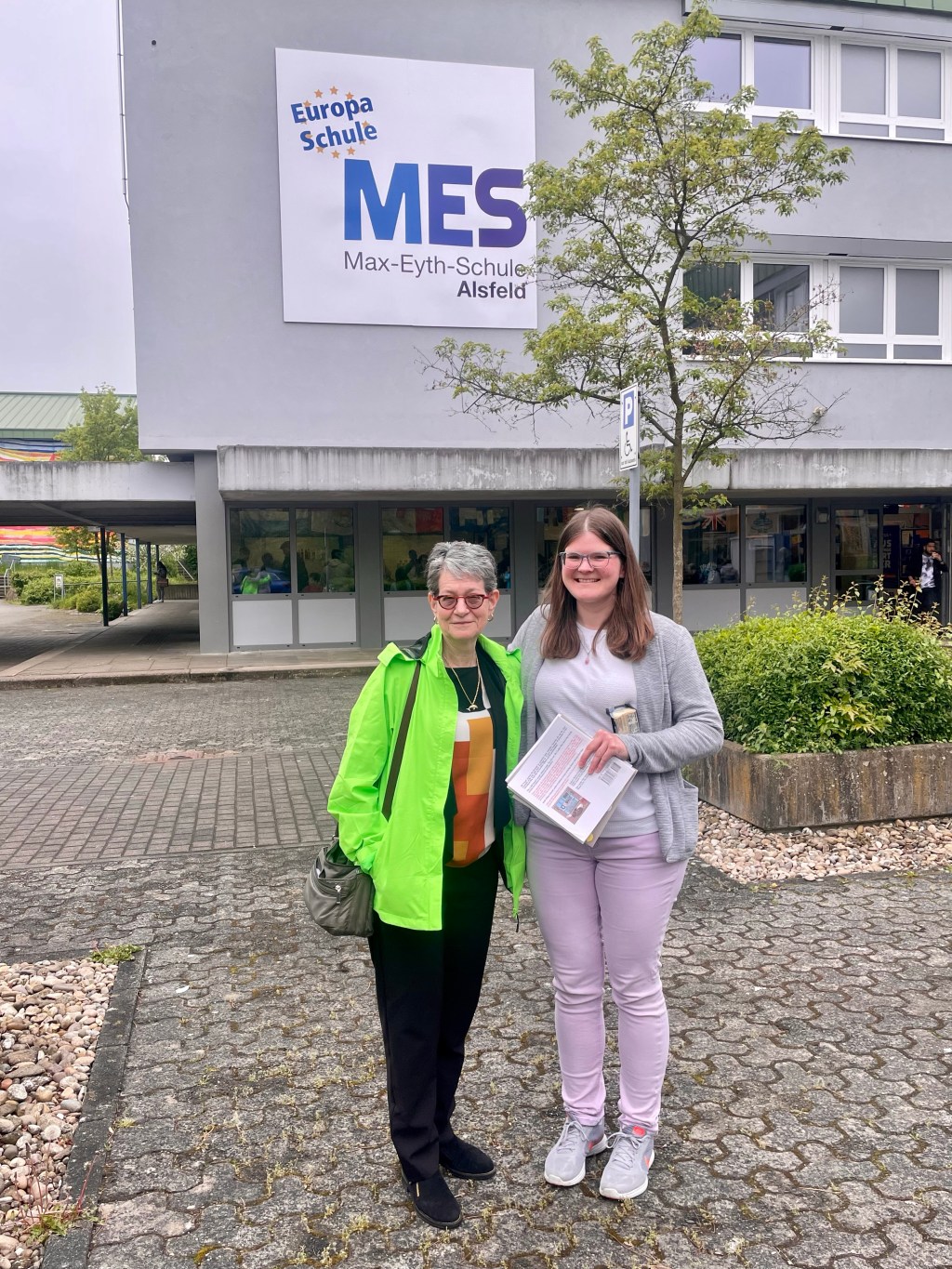
We started the day in Alsfeld, my mother’s hometown and home to my Steinberger family for at least 300 years.
We were greeted by Sarah Schaefer, a smart and engaging English teacher at the Max-Eyth School. Sarah made this visit possible! Sarah and I have been talking for months on Zoom. The key, we thought, was to prepare a presentation that would bring to life the experiences of Jews who lived in town and were forced to emigrate or were murdered.

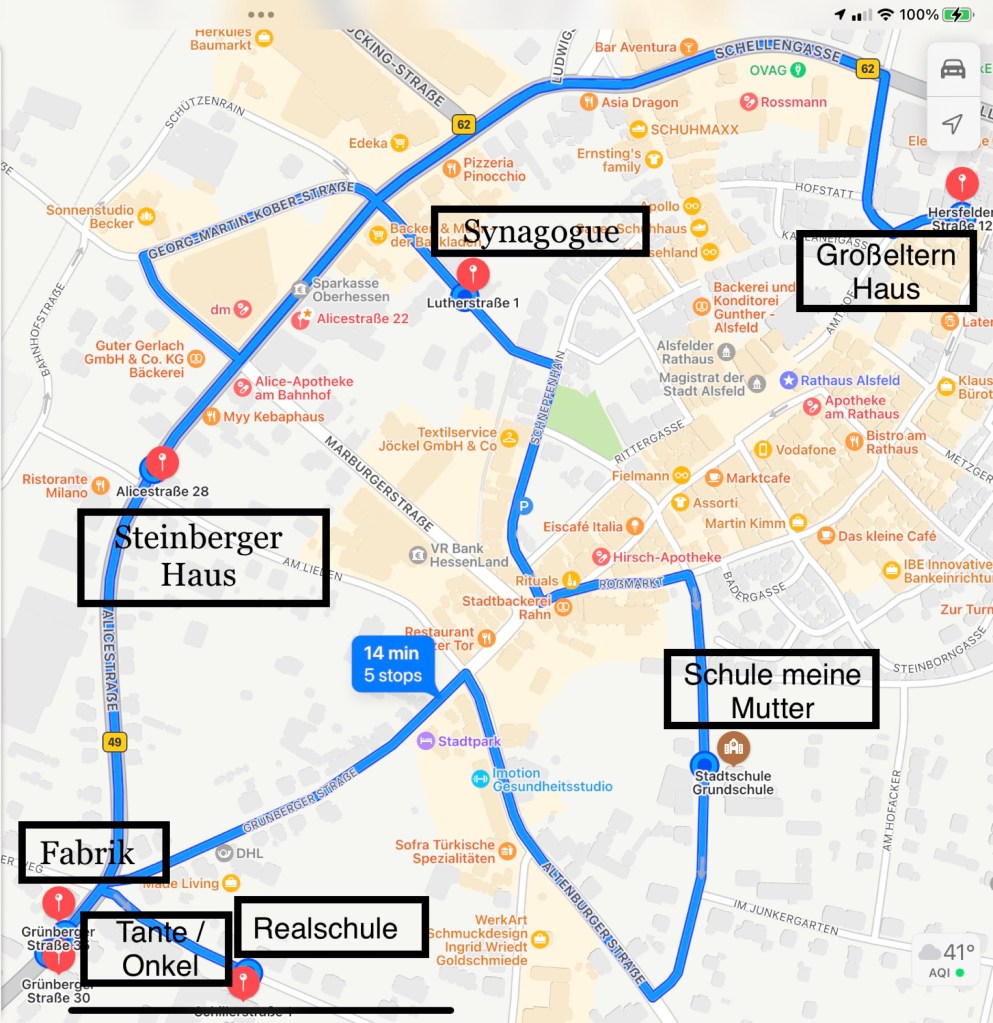
On this map, I showed the students the house where my family lived, the public school they attended and the synagogue where they prayed and where my grandfather was president. My family felt very German, yet my grandparents were smart enough to uproot their family, 8 months after Hitler took power, and move to Haifa.
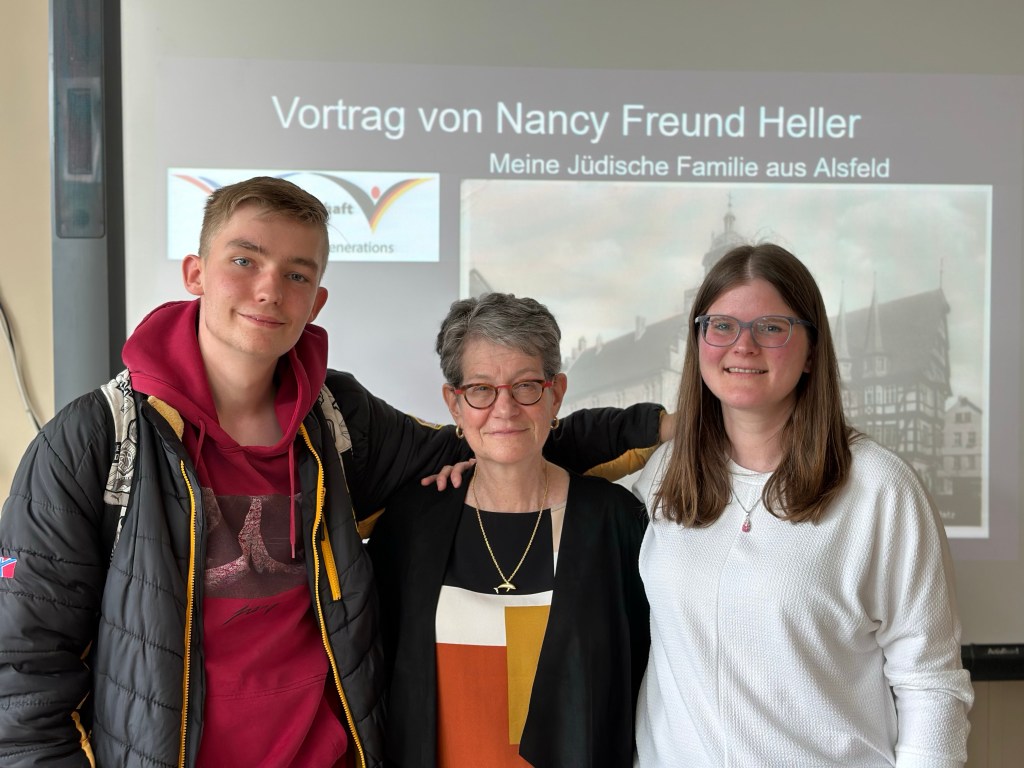
I showed the students lots of photos, including where my mother was born, where the synagogue stood and where my grandfather’s factory with 130 workers stood. Of course they knew all the locations. Alsfeld is a small town. One student actually lives in my mother’s old house, though he was not in attendance.

Several students shared their thoughts and feelings. Ferdinand stayed to speak with with us and to be interviewed by the local museum, which filmed one of the classes. Ferdinand thinks that we should learn from the past. Some students apologized on behalf of their great-grandparents. One thanked me for sharing my story while others nodded agreement; she said my personal story and the setting in her own town made real the pain that went with emigration and the trauma that was passed on through the generations. Some mentioned that their ancestors never spoke about the Nazi times, or had said they were indifferent when the Jews disappeared. Others said they had great-grandparents who were in the SS.
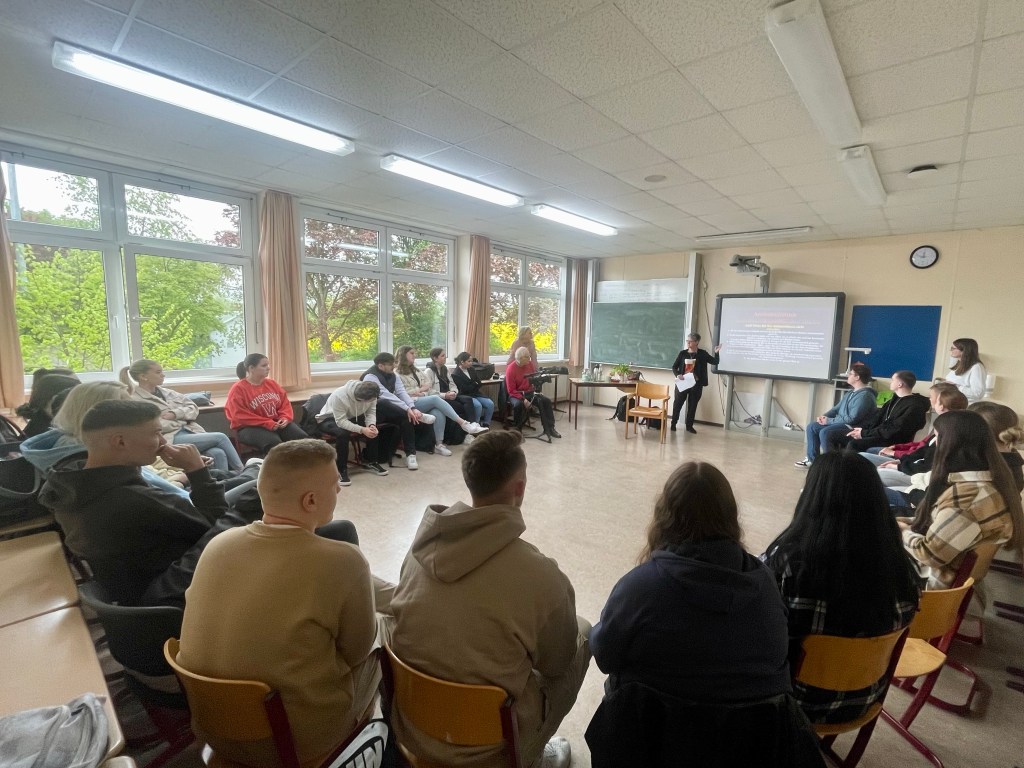
History teacher Andreas Scheumann and his class joined us after a brief lunch. I somehow didn’t get a photo of him. His students were fully engaged and asked numerous questions.
I shared my complicated feelings about Germany. On the one hand, my home in suburban New Jersey was typically German, with German food and customs. When I came to Germany the first time, it felt much like home. On the other hand, many family members were murdered. It’s hard to reconcile except to believe in helping innocent young Germans to understand this history so it never repeats.
It will take time for the students and their teachers to process what happened to today. Millions of murders and millions of refugees are hard to fathom. The story of one family from your neighborhood is easier to grasp.
The teachers will speak with the students and share their reactions.
After class, we drove to Speier Haus in nearby Angenrod.
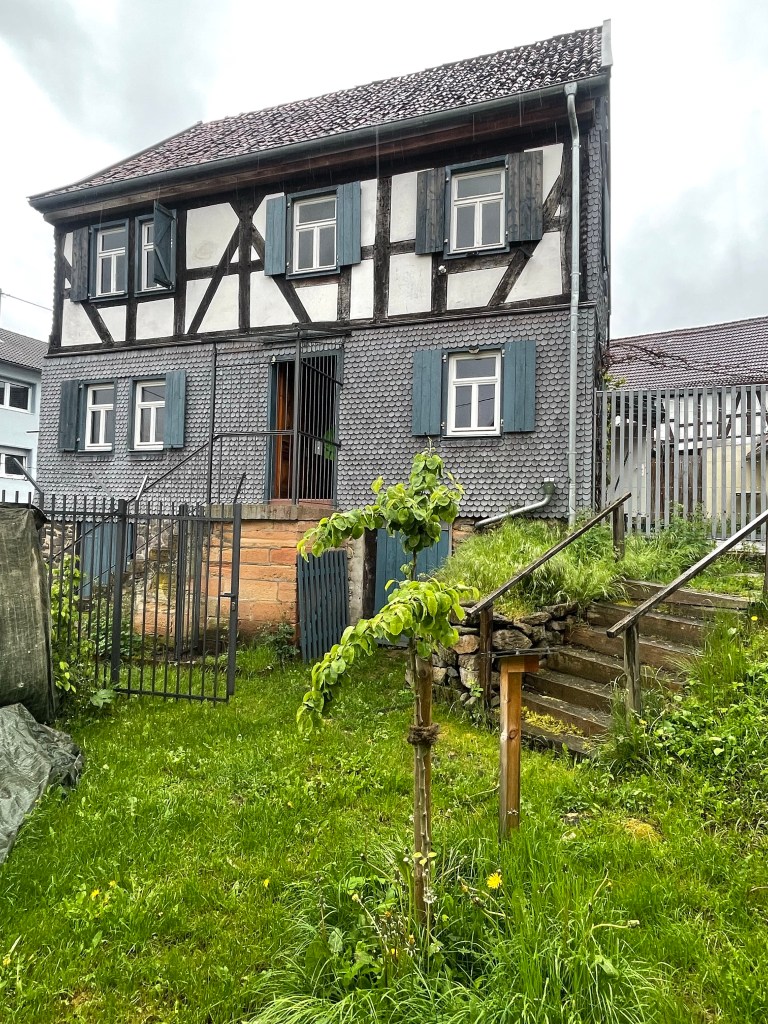
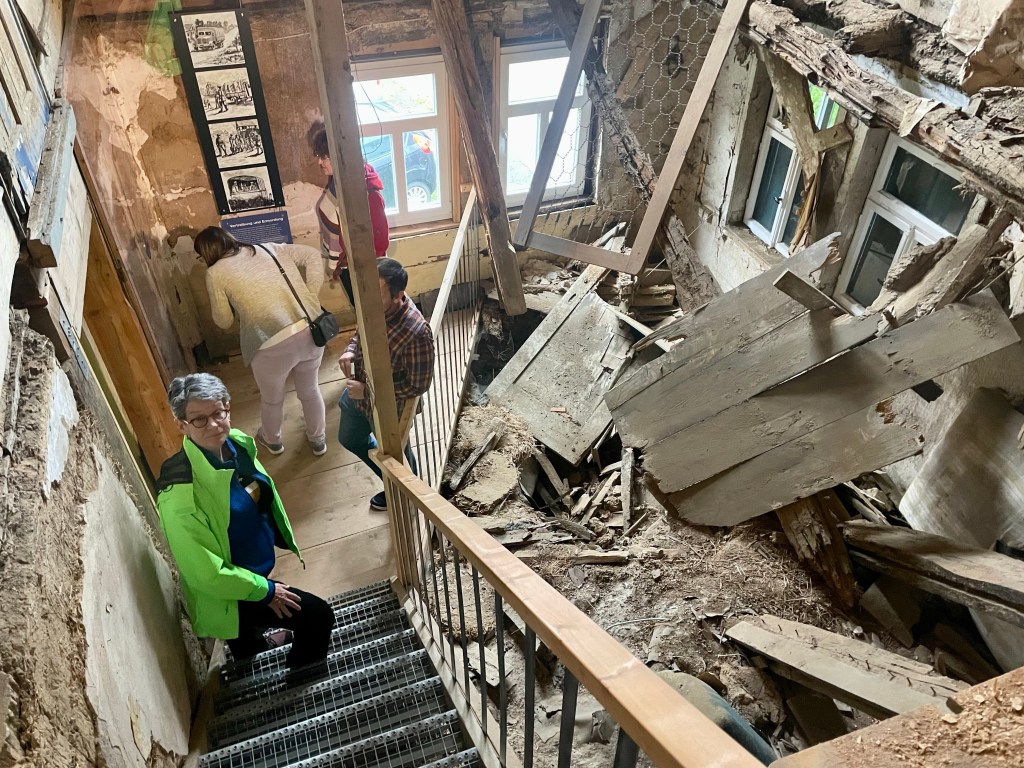

Dedicated volunteers have made Speier Haus into a center to educate students about the local Jews who were murdered or forced into exile; and to teach the students that Jews are not fossils, that We Are Still Here, even if not living in Alsfeld and Angenrod. I gave Speier Haus some Jewish ritual objects and information to help further their goals.
Then Jeffrey and I took our German friends to dinner. They gave me some sweet local treats and a book about Alsfeld published on the town’s 800th anniversary in 2022.
My brain is fried. It was a good day. A memorable day. An emotional day. And a German-immersion day.
To read prior essays, click HERE.


 Germany: Roots & Remembrance
Leave a comment