-
Day #5 – Munich Fog
While we had hoped to visit the famous Alte Pinakothek museum today, it is closed on Mondays. Instead, we visited Haus der Kunst (House of Art) and we were not disappointed. An exhibition by Fujiko Nakaya was called “Fog”. Every 15 minutes, the room slowly fills with fog around a pool of water. Other pieces of art included the use of fog in various settings.
We learned later that the building was constructed from 1933 to 1937 as an example of Nazi architecture to show Nazi “art”: propaganda. There is talk about whether renovations should change the outside of the building due to its history.
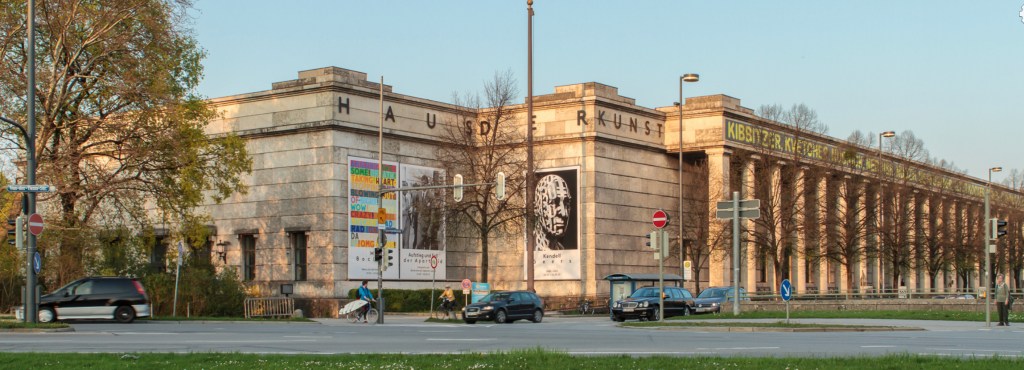
House of Art, opened in 1937 as Haus der Deutschen Kunst to show German art that was not classified as ”degenerate”. 
Nakaya’s art is impressive. Here, the fog is starting to rise. 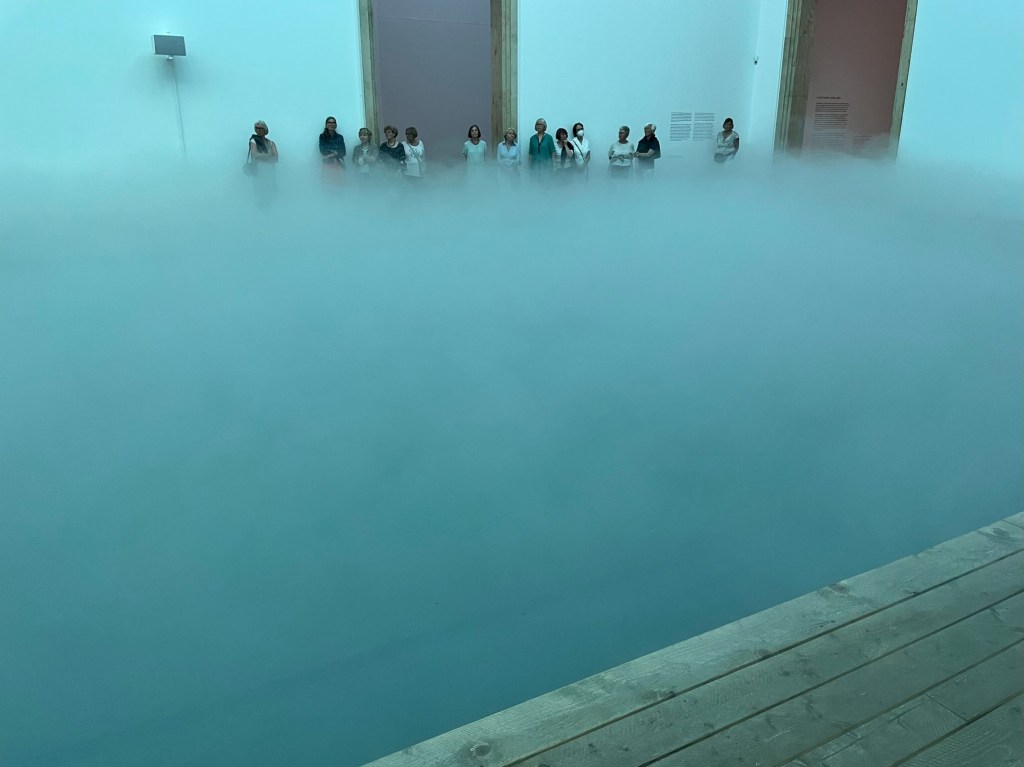
Fog fills the room 
Nancy in a fog. Another exhibition focused on technology and what is real versus fake.

I wish I could show you a video of the moving words in this other exhibit. Standing in the center of the room was dizzying as the floor seemed to move. 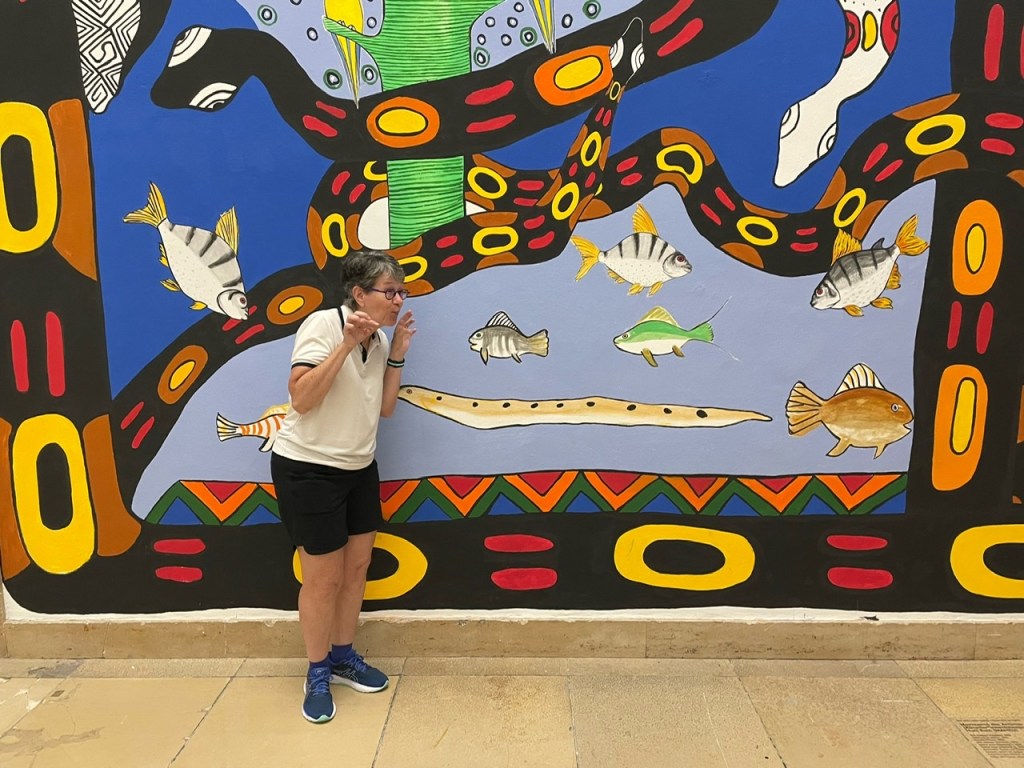
And this is—well, you decide—have I turned into a salmon? On the way to and from the museum we saw some fascinating architecture, lovely green parks and various memorials, monuments and important buildings. We walked 10 miles today as we wound our way around the city.
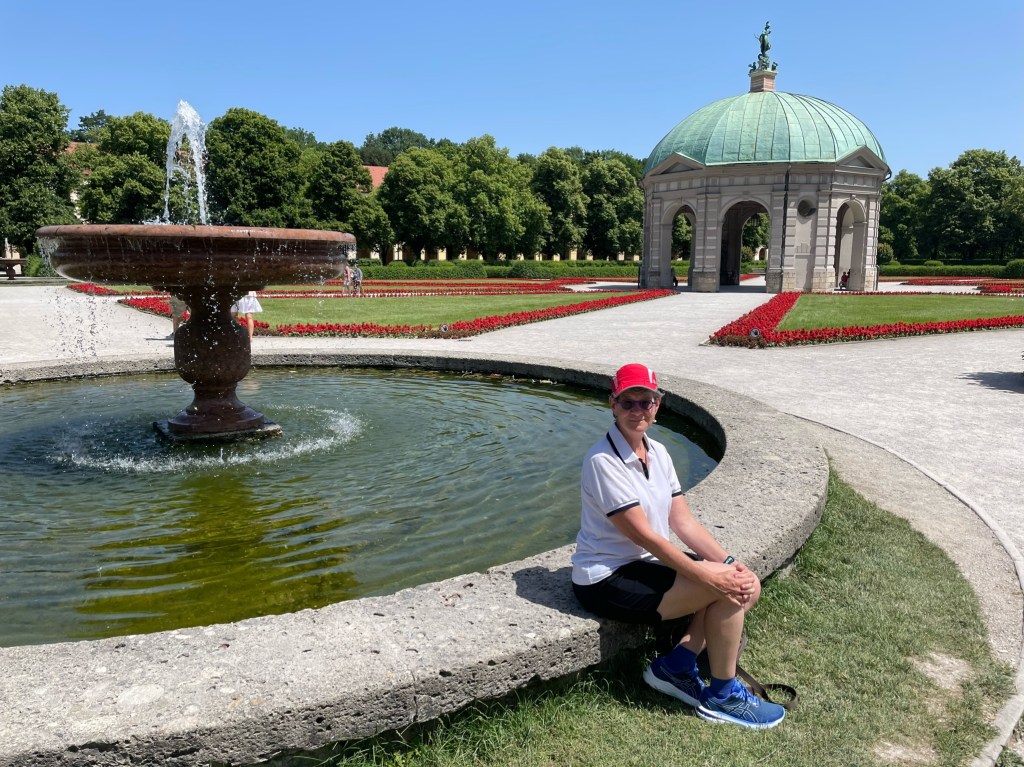
Beautiful Gardens 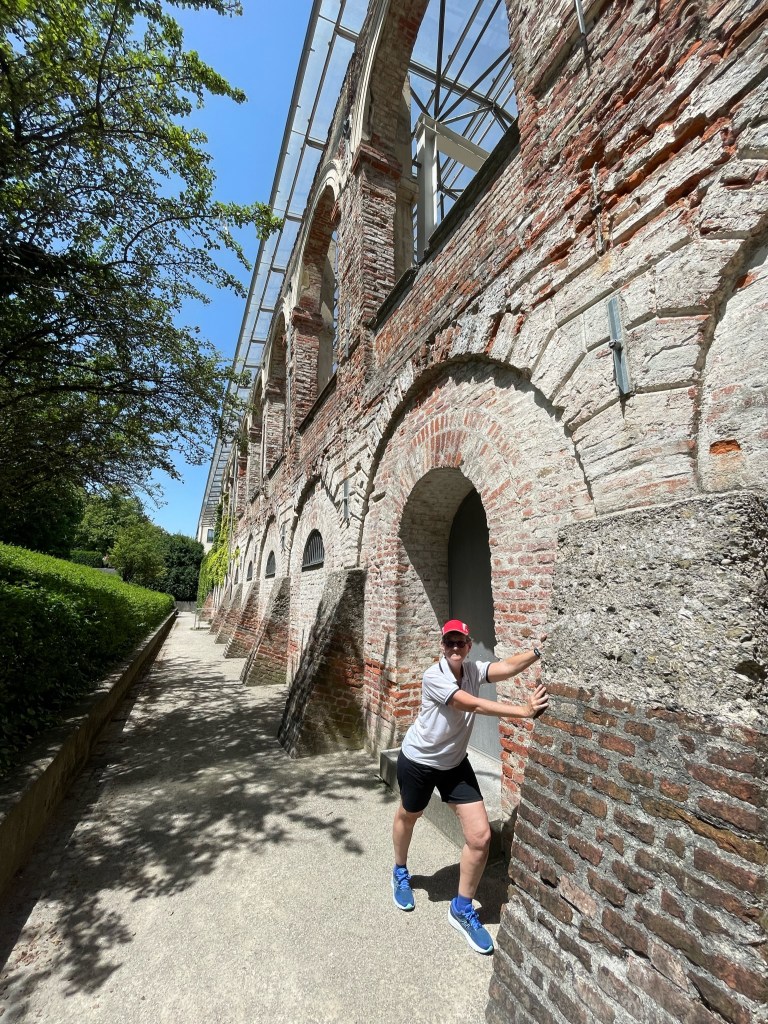
Old Aqueduct 
Aqueduct There were memorials for those murdered between 1933 and 1945 due to national socialist persecution.
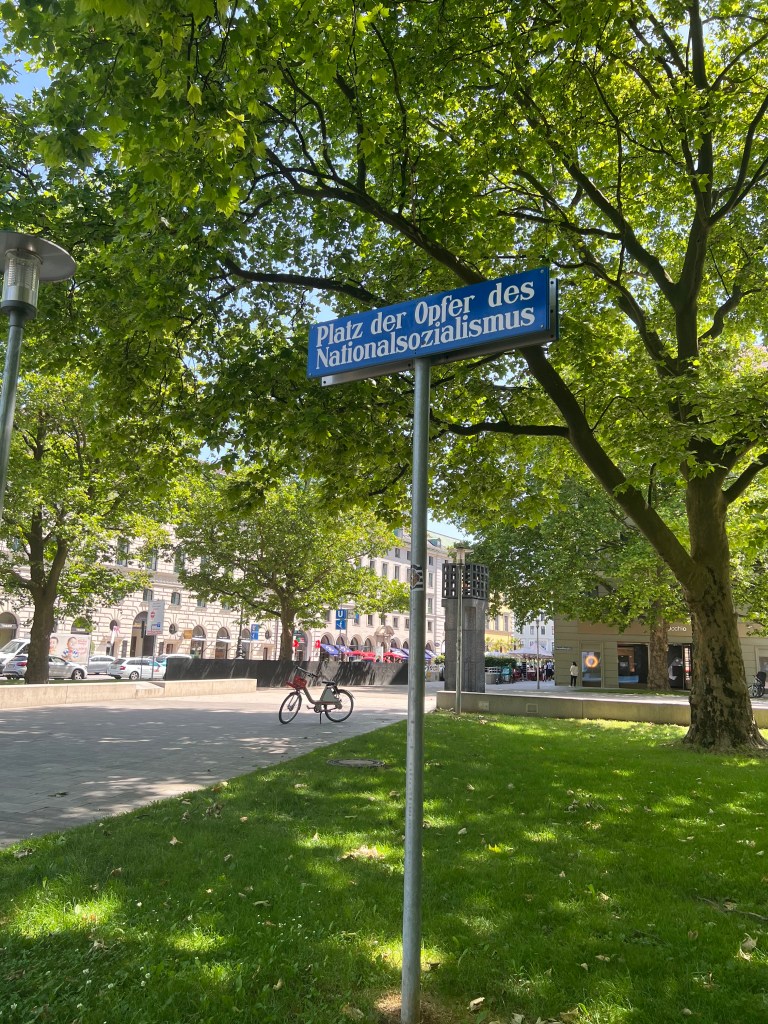
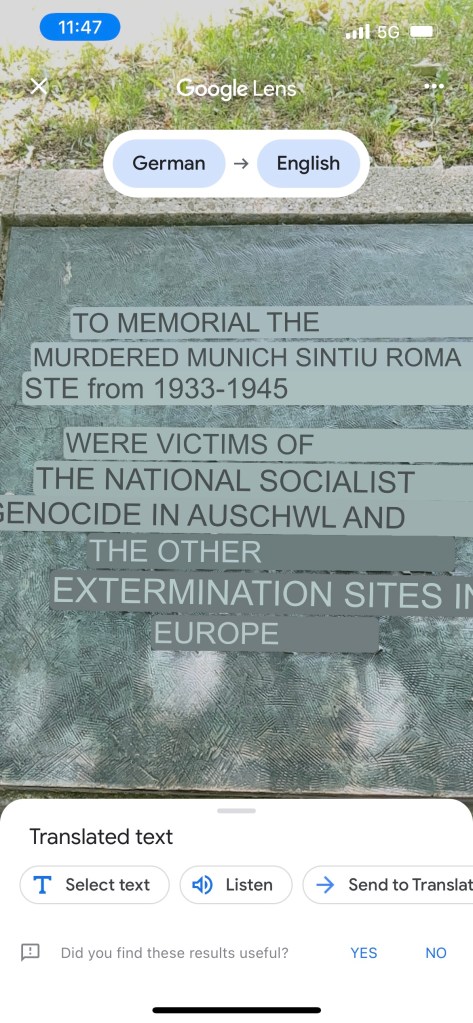

An eternal light burning 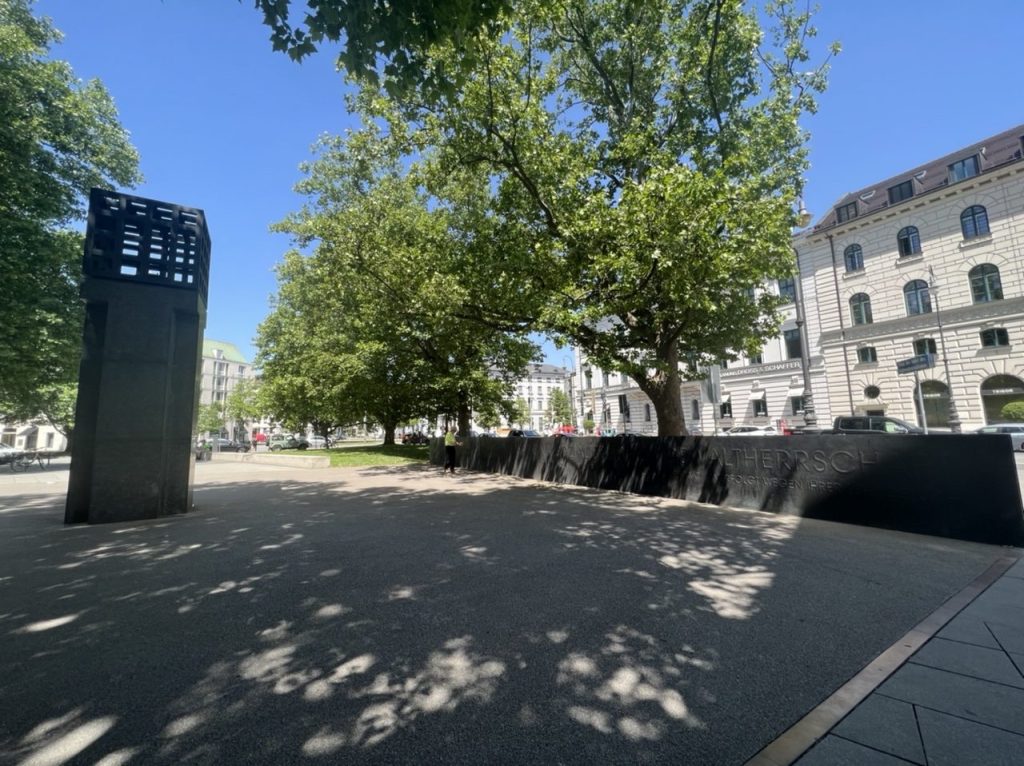
Eternal light and long memorial There was a memorial to the White Rose, but the sun was directly in front of the memorial and thus did not photograph well enough to show you. The White Rose was a non-violent, intellectual resistance group in Nazi Germany led by five students at the University of Munich. The group conducted an anonymous leaflet and graffiti campaign that called for active opposition to the Nazi regime. Their activities started in Munich on 27 June 1942, and ended with the arrest of the core group by the Gestapo on 18 February 1943. All were murdered.
We also saw Munich’s old Rathaus and the street where Hitler and his gang marched to carry out what was called the Beer Hall Putsch. Hitler was jailed and as many know, it was in jail where he wrote Mein Kampf.

Hitler and his followers on the way to the Putsch 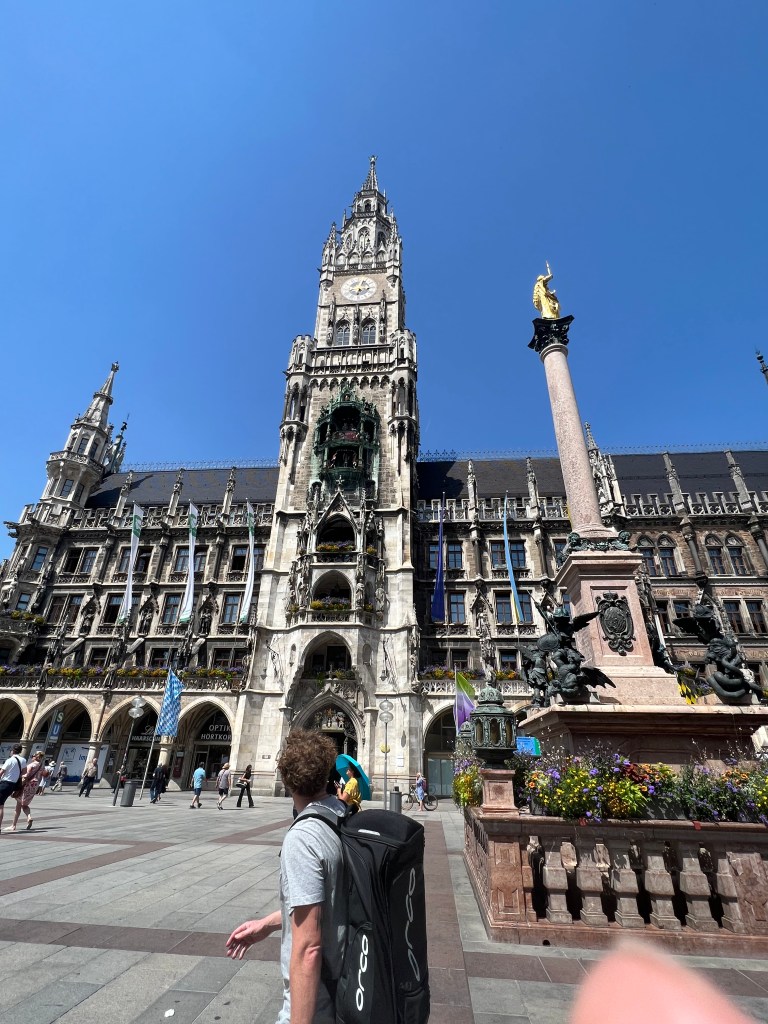
Old Rathaus We found ourselves in front of the Jewish Museum, Munich synagogue and kosher restaurant (all closed on Mondays). It was here that we learned the Nazi origin of the art museum building.
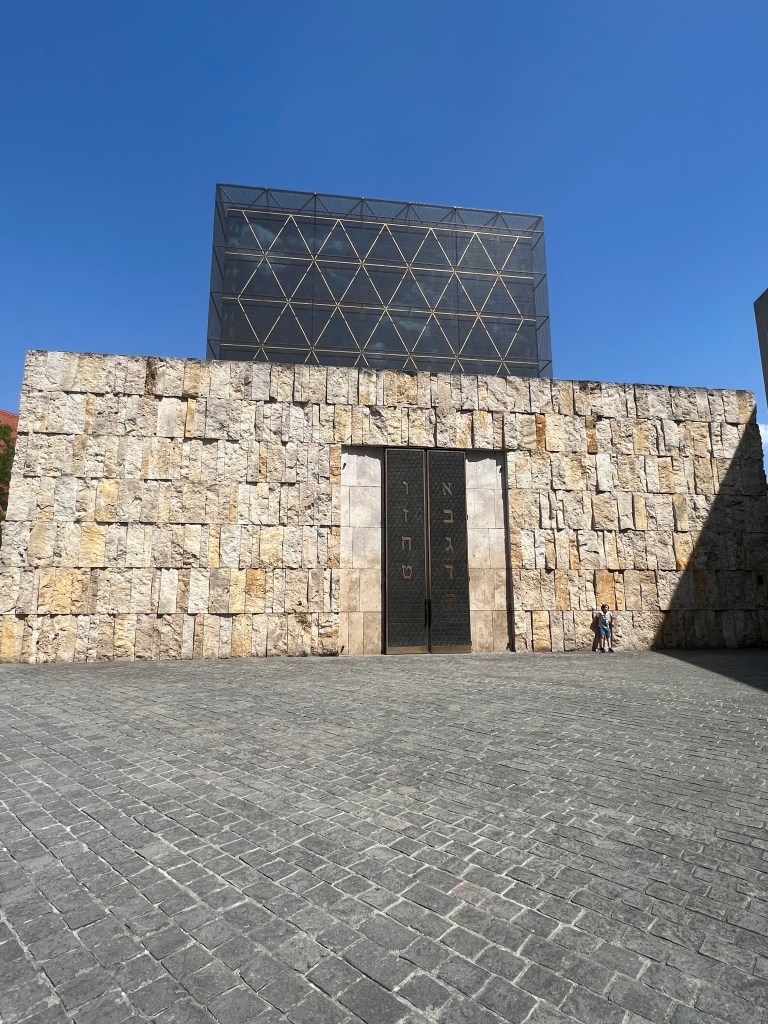
Munich synagogue 
Kosher restaurant 
We said our goodbyes to our dear friends after a lovely Turkish dinner, another first of a cuisine for me.
Dass is alles for today! Tomorrow it’s on to Nuremberg.
To read prior essays, click HERE.
-
Day #4 – Welcome to the Bundes Republic of Germany and München/Munich
Some say that we have family and friends in almost every country. It may be true. WWII sent my family around the globe.
On day #2, I mentioned that in 1933 my dear mother sailed to Haifa from Germany with her family. She was just 13. There she made many friends (often other German refugees). Tonight our dinner companions included the grandchildren of one of those friends. Like me, they have two passports, one of which is German, due to laws passed by the German government to reinstate citizenship to Jews who were stripped of their citizenship during the Nazi era. Though my German born father wanted no such citizenship, I jumped at the chance for a second passport (EU) for myself and my kids. Some Jews even moved to Germany and we had the pleasure of dining with their children and friends.
It was joyful and fun and wonderful to catch up. We could mix English, German and Hebrew into our conversation. Of course we talked about Germany’s social safety net, housing and ice cream prices, politics, Covid, the families and our adventure. I ate vegetarian Vietnamese food for the first time in my life and it was delicious.
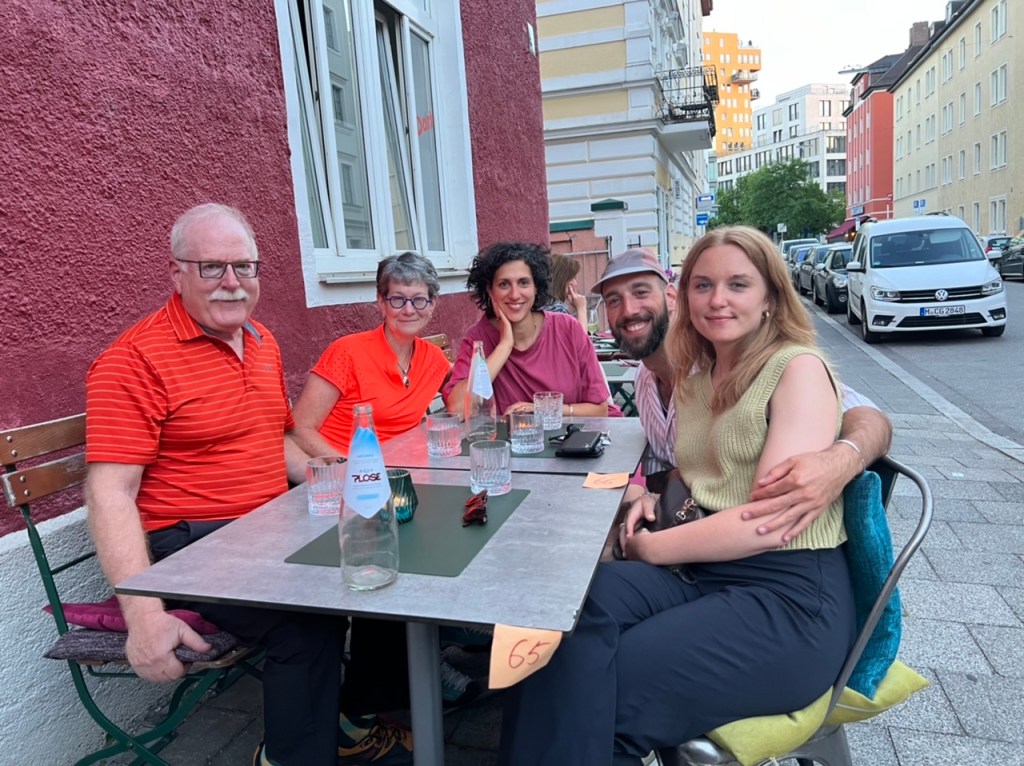
Dining out in Munich. L to R: Jeffrey & me, our family friends Moran & Itamar, & their friend Ellie. Now to backtrack a bit to yesterday. We had a marvelous evening at the wedding in Weitra. The sun came out after a day of thunderstorms and it was a gorgeous afternoon and evening. Our hosts were welcoming and charming; the couple overjoyed and in love. We were delighted to attend and had fun, viel Spaß.

Jeffrey, our amazing long haul driver, steered us safely to Munich today. It was a four hour car ride on small roads and highways. Once in Germany, the Autobahn had no speed limit and some cars flew by at more than 100 miles per hour.
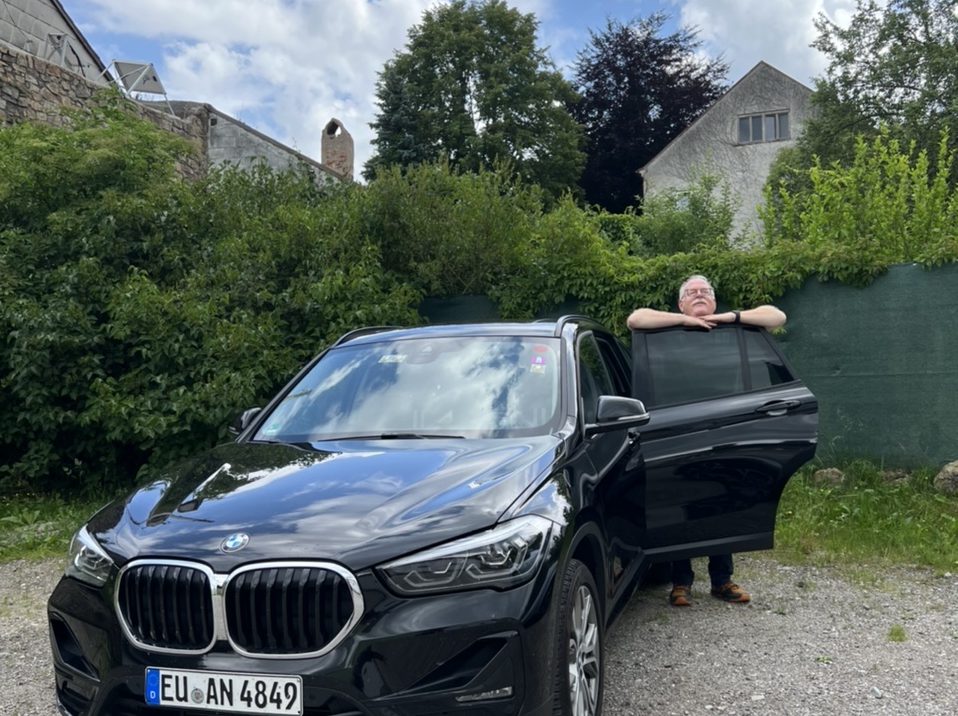
Yes, Mr. Jeffrey is driving a BMW, Bavarian Motor Works or Bayerische Motoren Werke. It was only yesterday, that my father reminded me the “B” in BMW does not stand for British. And how appropriate for our visit to Bayern! We passed lots of farms with cows and crops, and small towns with prominent church spires. Well-kept houses were painted in varying colors.

We saw many houses with solar panels. Click on the small photos to make them larger. 

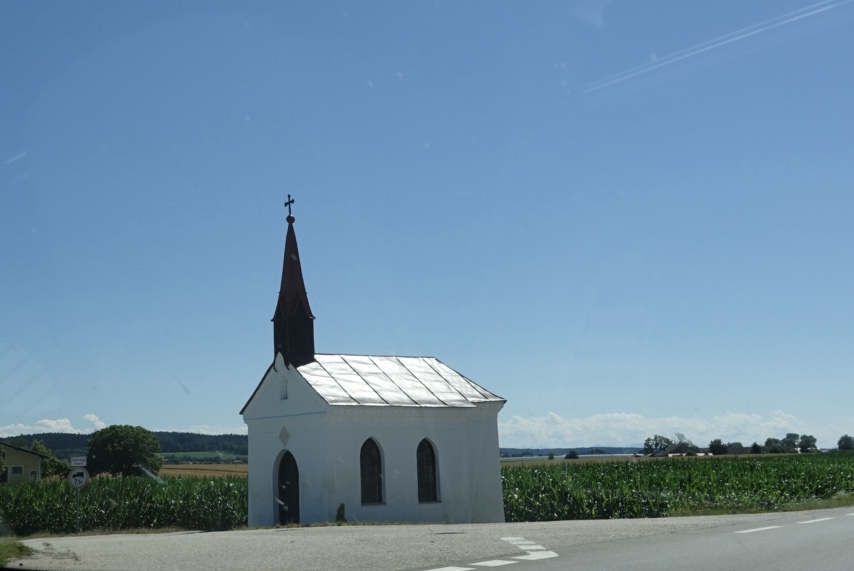
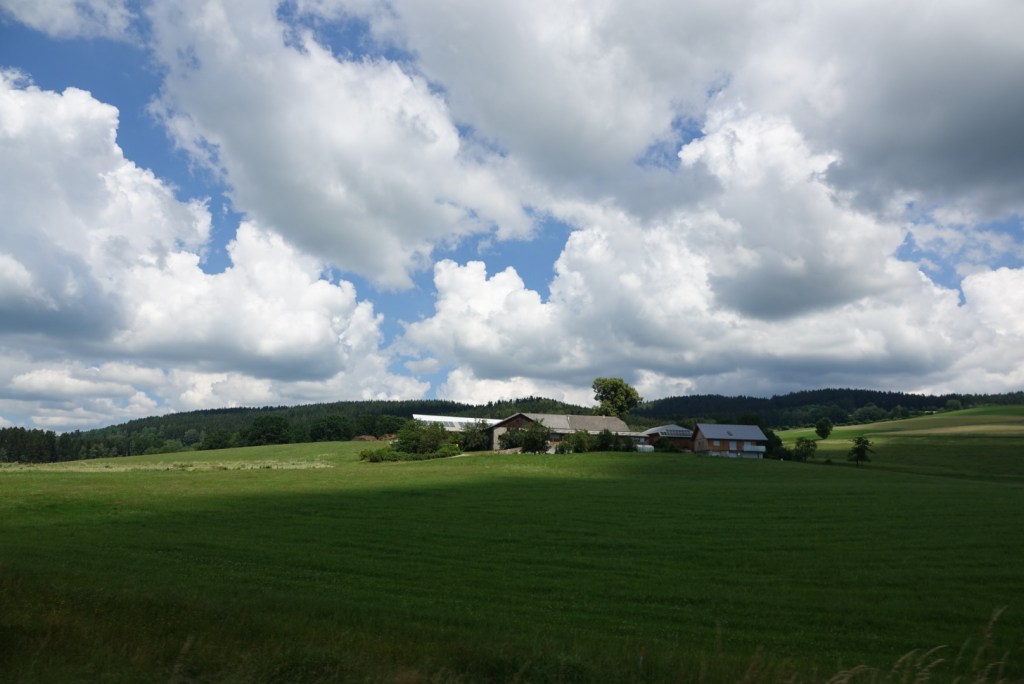
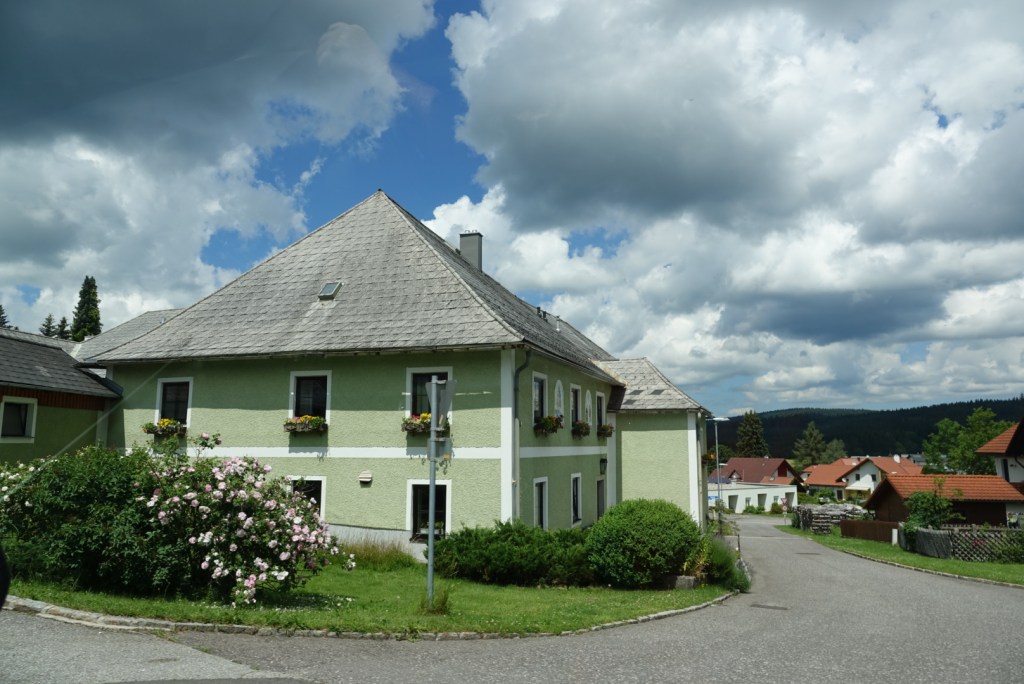
After driving for hours, we crossed into Germany. The Austria-Germany border is shown below – the sign says, ”Bundesrepublic Deutschland”. The police were not stopping cars. Where is the word “welcome” that we see when entering a new state in the USA? The Germans couldn’t give a greeting?
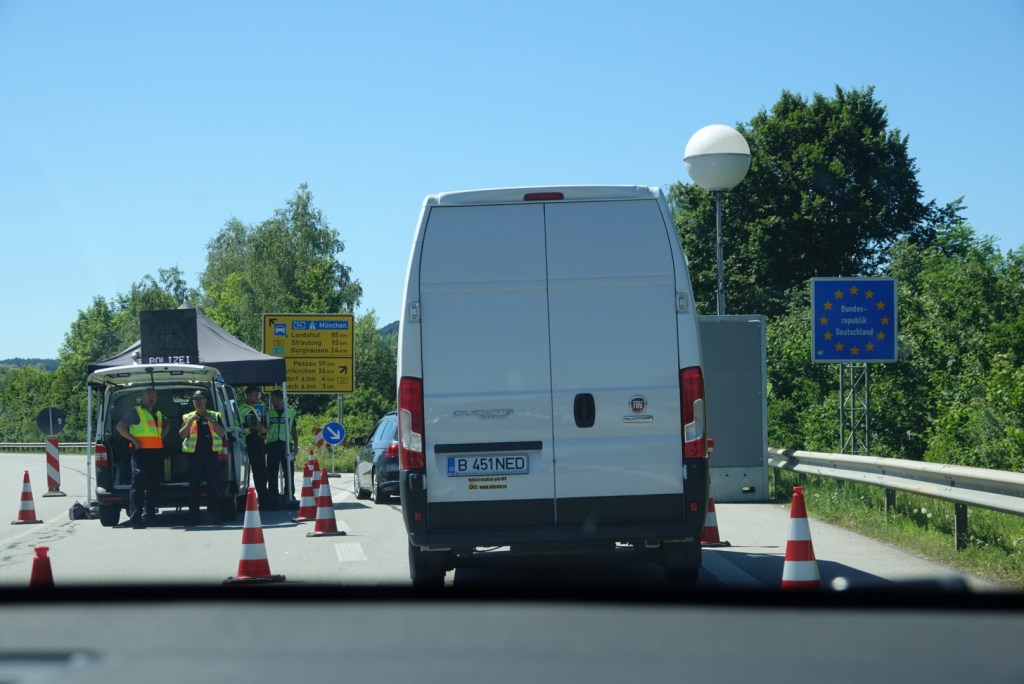

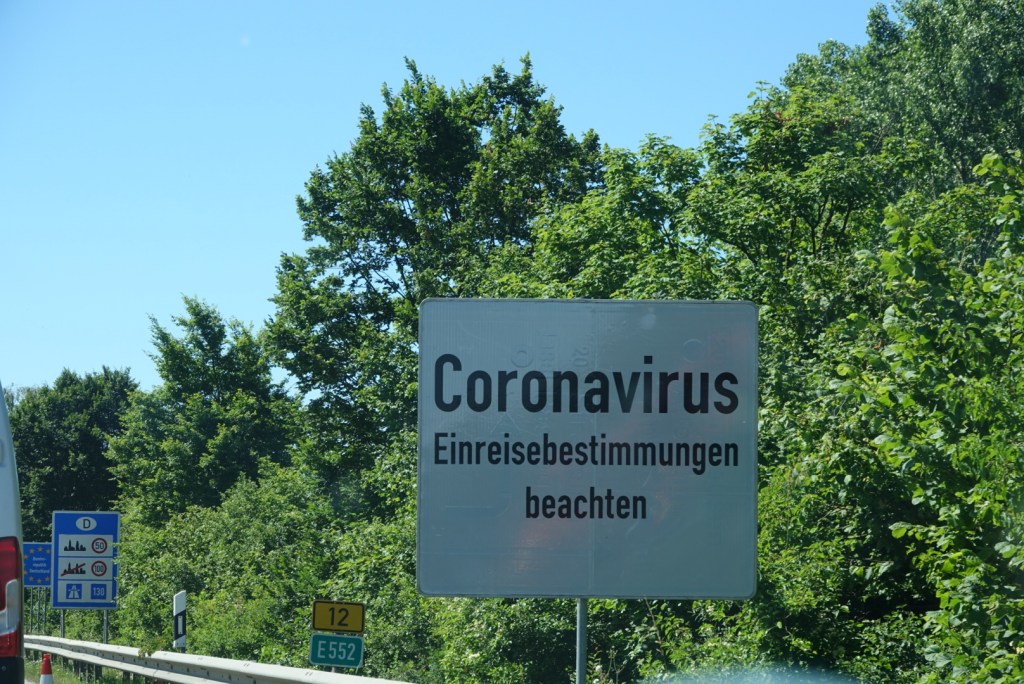
At the border was a sign for the “free state” or region we entered, Bayern, just two hours from my father’s hometown of Nurenberg. The coronovirus sign with a super long word, says to adhere to local regulations. Munich is lovely so far. Tomorrow, we will explore a bit while our friends work and then we will reconvene.
Tschüss! Bye for tonight.
-
Day #3 – Feeling at Home in Europe –

In so many ways, Austria and Germany feel like the home in which I grew up. We ate 6 minute eggs in small cups with little spoons just like this. We had little baskets for warm eggs and bread. Our beds were made with duvet covers. When my parents first took me to an American hotel, I remember asking my mother how to get into a bed that has no duvet cover.
I sampled some of the famous (though unknown to us) local beer. The food is delicious and the signage, like England, very clear.

This is the local beer; a small stein was “free” at our hotel. Of course as Milton Friedman said, there is no such thing as a free lunch. 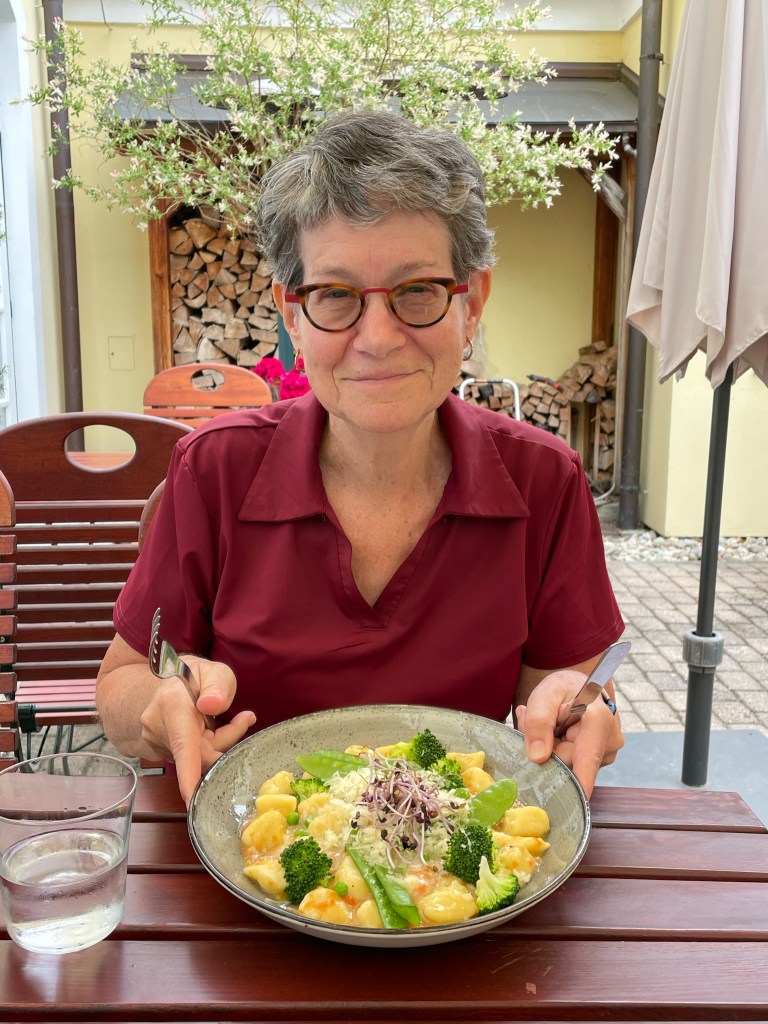
I lunched on gnocchi and fresh veggies, and of course salmon for dinner, no fish-photo taken. A glass of wine is $3 or less here and the dollar is strong, so other than gasoline, things have been inexpensive so far. Our trip to the grocery store for lunch was a bargain. 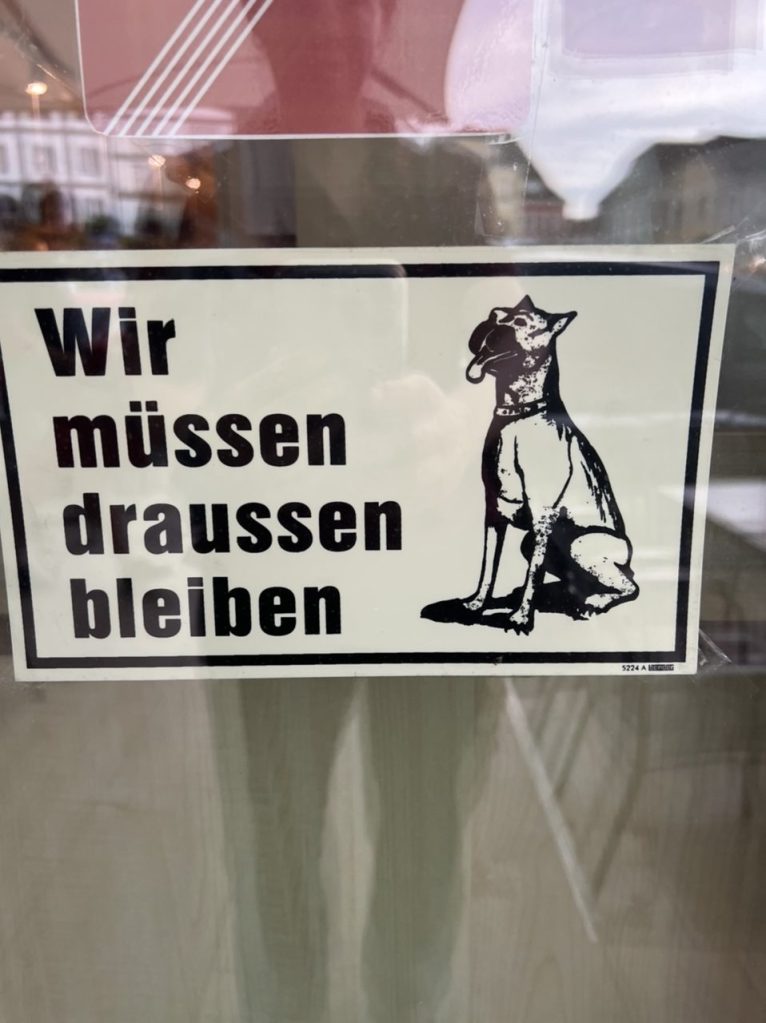
This bakery sign leaves no doubt that dogs must wait outside. 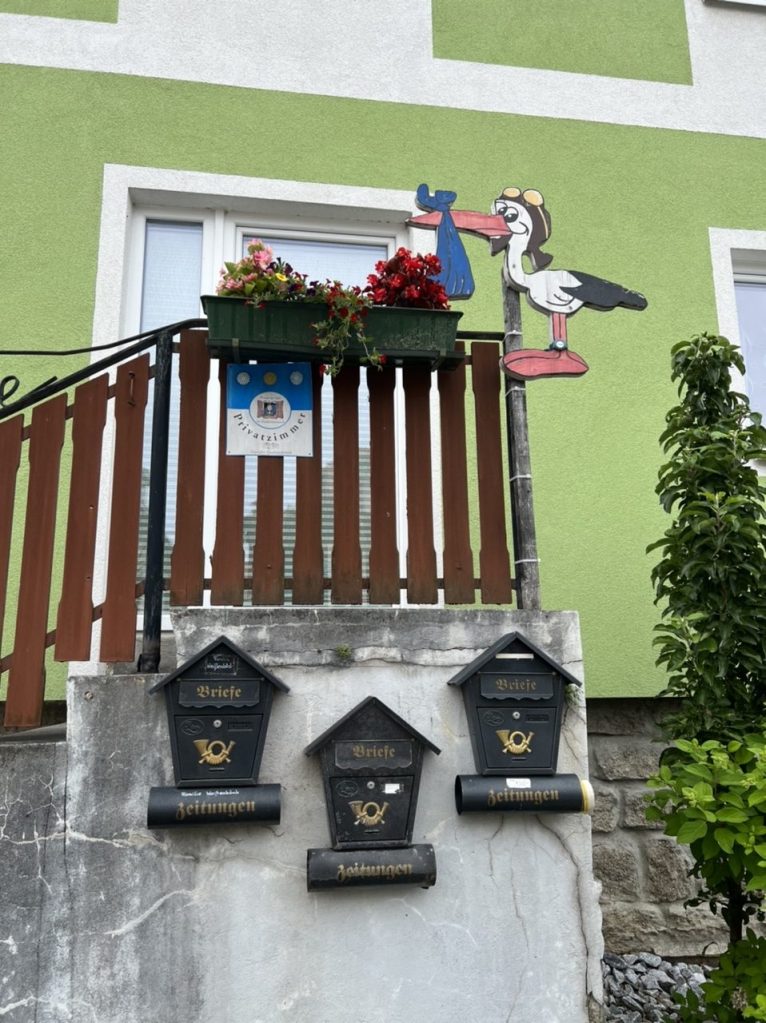
I love how the mail and newspapers are delivered by the stork! 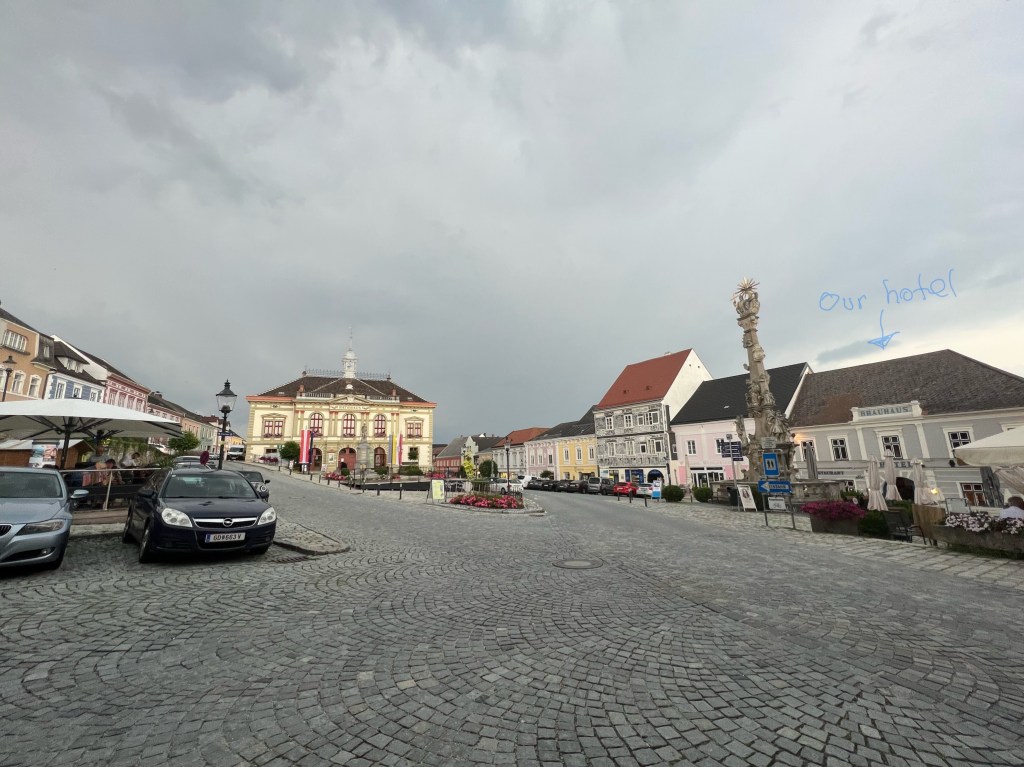
And finally a better view of the town of Weitra. Our hotel is on the right. Finally, I recommend that you read an article from today’s New York Times. As a daughter of two parents who fled the Nazi regime in the 1930’s, I can relate to the story. Amy Gutmann’s father lived in Bayern or southern part of Germany, the same area as my father, who is from Nuremberg.
-
Day #2 Weitra, Austria
Thanks to those of you who read yesterday’s post. Today, I’ve moved the blog to WordPress, which should be easier to follow for those who are interested to receive email updates.
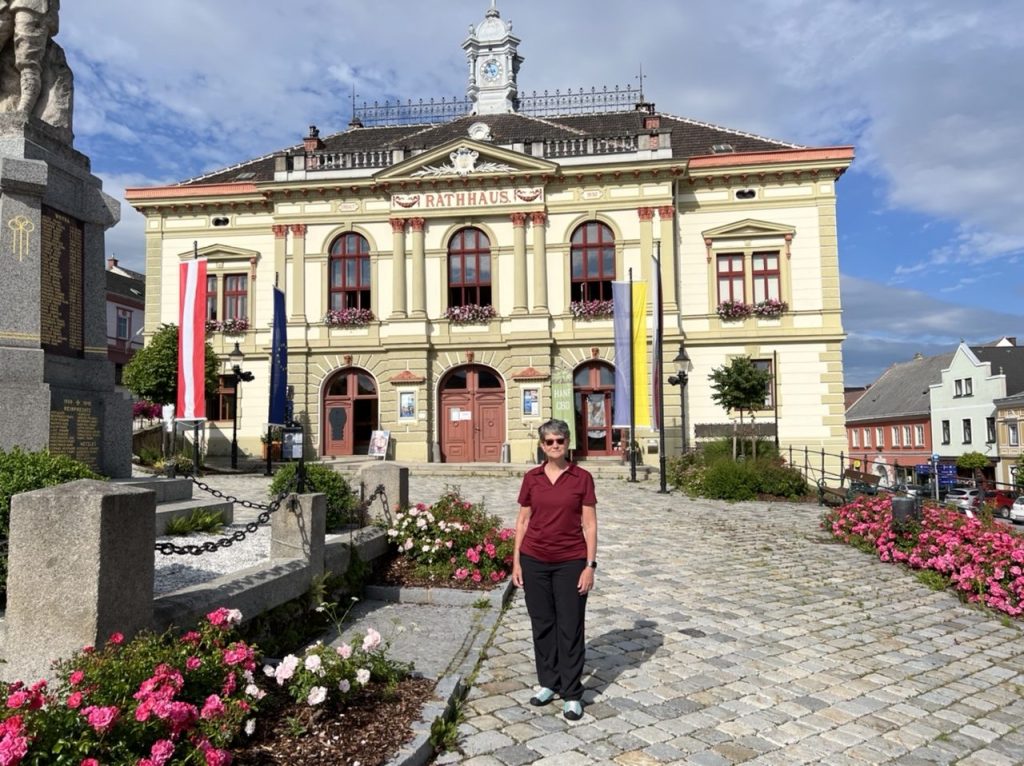
I’m standing in front of the town hall, in German the Rathaus (for some reason spelled with a double ”h” on the building). Almost every town has one and this Rathaus is particularly beautiful.
We drove ten minutes to Gmünd, ate a lovely lunch and walked into the Czech Republic, now part of the EU. The old passport checkpoint is just a drive through. The Iron Curtain barriers are gone.
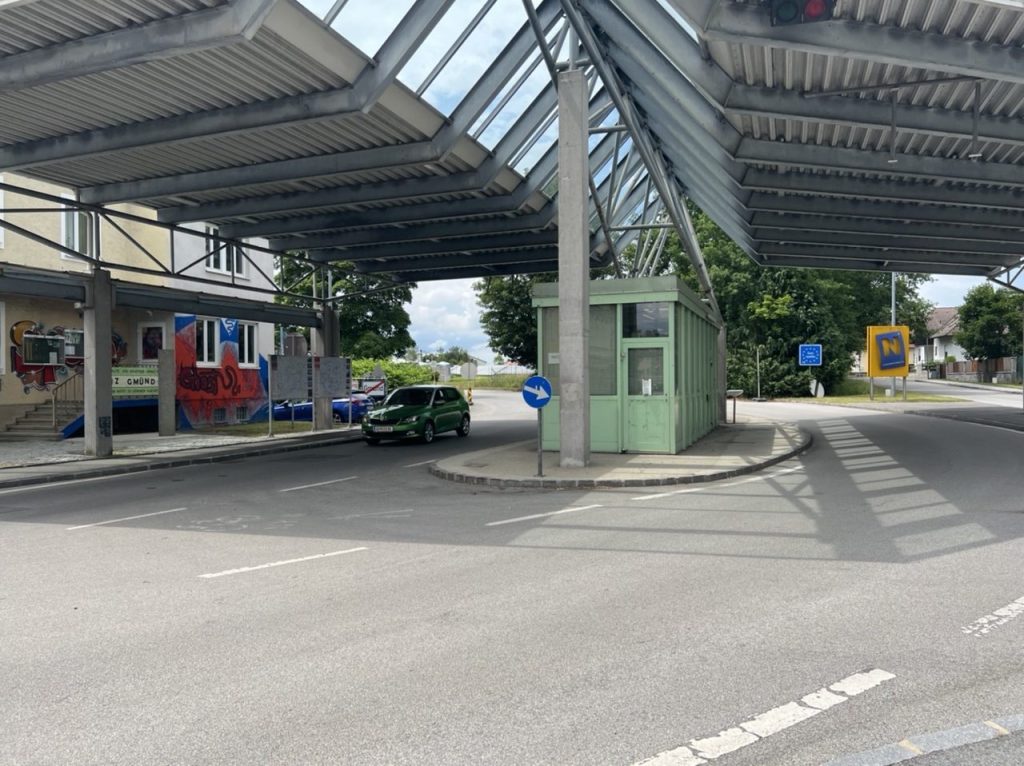
Old Czech Border Crossing, now just a pass through 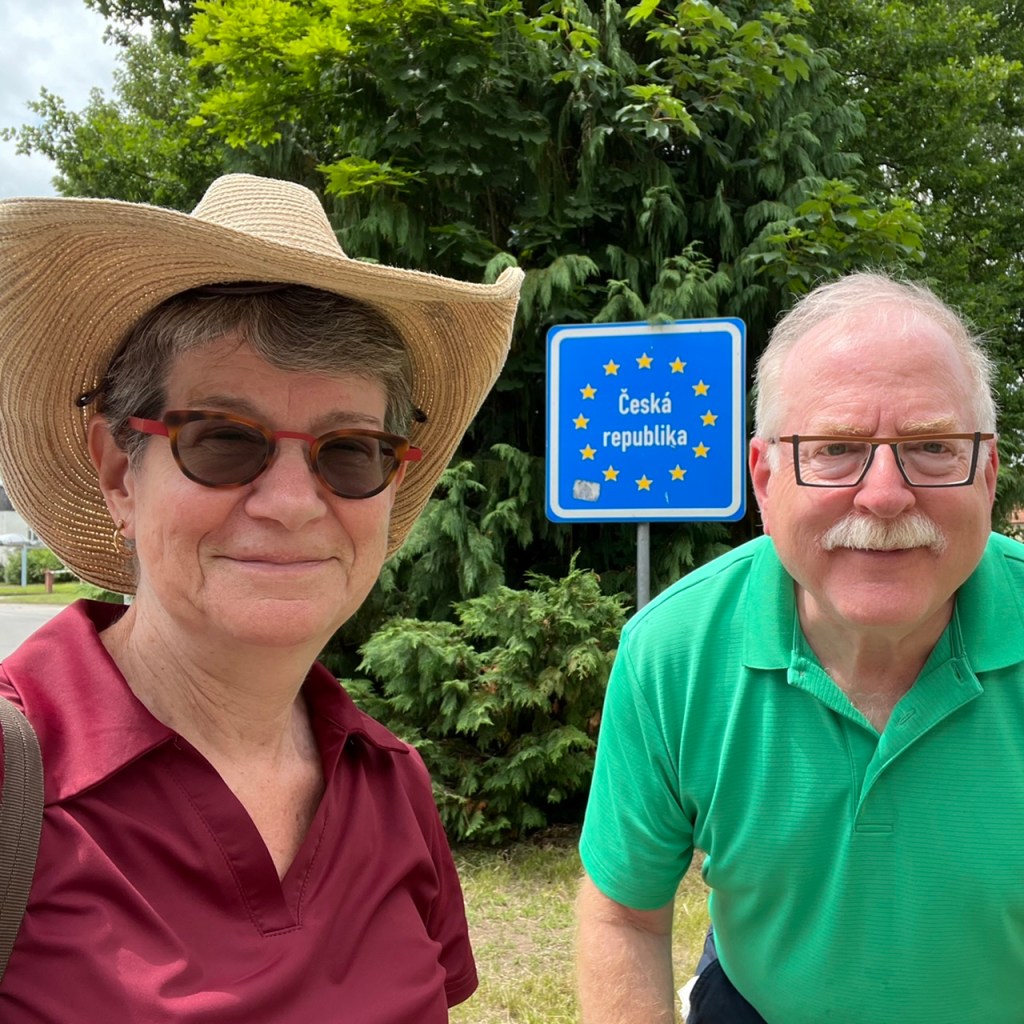
Standing at the Czech border 
Turning around, you can see that this sign is overgrown. No one is paying attention to the border. How refreshing. We ate in the lovely courtyard of the Golden Star restaurant.

Gmünd, Austria From there, we drove to a textile factory museum. To my amazement, a display on shipping showed the exact ship, the Martha Washington, on which my mother (may she be remembered as the extraordinary person she was) sailed to Haifa from Germany via the port of Trieste. While I had seen a photo of the ship, I never had seen the interior.
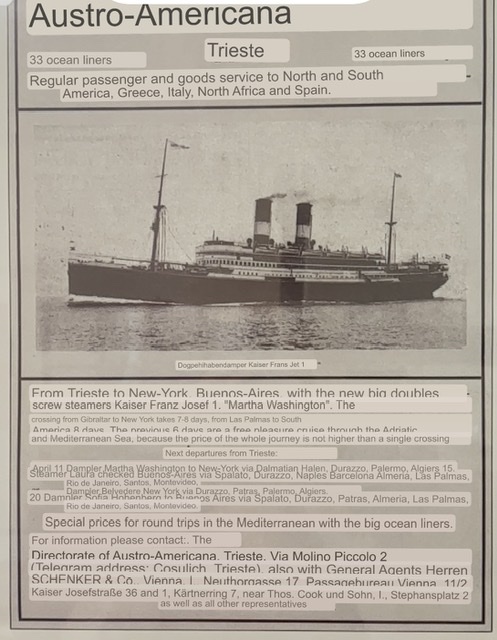
Details on the ship using Google Translate. It’s not perfect, but most of you don’t read German. 😉 
The Martha Washington. To read prior essays, click HERE.
-
Day #1 – The Trip Begins
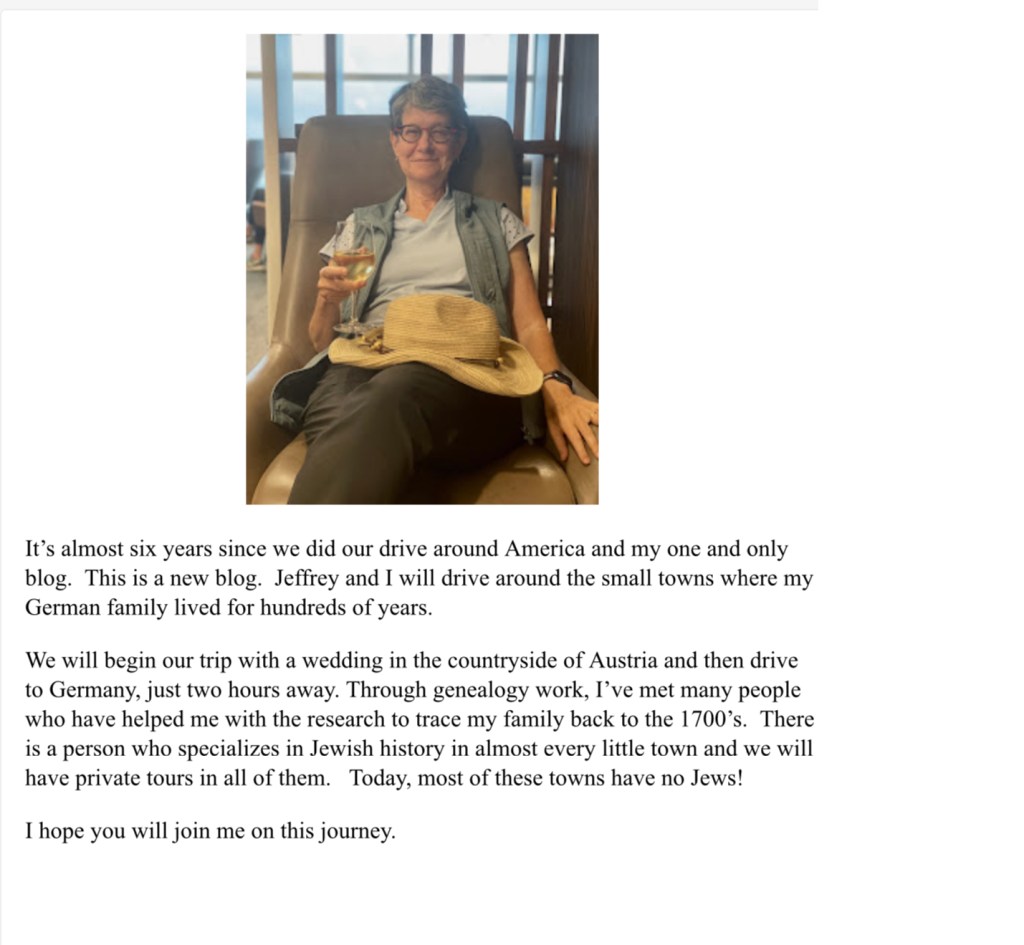
Decided to copy day #1 here so all posts are on WordPress. Only error is that is it s 4 hour drive and not a 2 hour drive from Austria to Munich. To read prior essays, click HERE.
-
Subscribe
Subscribed
Already have a WordPress.com account? Log in now.
 Germany: Roots & Remembrance