
Jews murdered by the Nazis were denied the dignity of a funeral and a place for mourning and remembrance. Yesterday, the city of Munich made amends, erecting stainless steel monuments, promising to read the names aloud every year, and giving the family time and a place to mourn and say goodbye.
The head of the Central Archives of Munich (Dr. Daniel Baumann), a representative of the Lord Mayor of Munich (Dr. Evelyne Menges) and a representative from cultural department of the state capital (Barbara Hutzelmann) spoke about the horrors of the Nazi period and the murder of our family. With tears and in sorrow, they addressed the gathered family, friends and guests, acknowledging Germany’s responsibility although they, personally, are not responsible for what happened before they were born.


I gave a eulogy for seven lost family members. Jeffrey and Sandy read poems that I had chosen. I sang from Psalm 92, Tzadik Katamar, to the melody by Jewish German composer Louis Lewandowski (1821-1894). Then we all said Kaddish, the traditional Jewish mourning recitation that is a hymn, not a prayer; is in Aramaic, not in Hebrew; and does not mention God. All the speakers agreed that repair of the world (in Hebrew, tikkun olam) requires reconciling with the past.
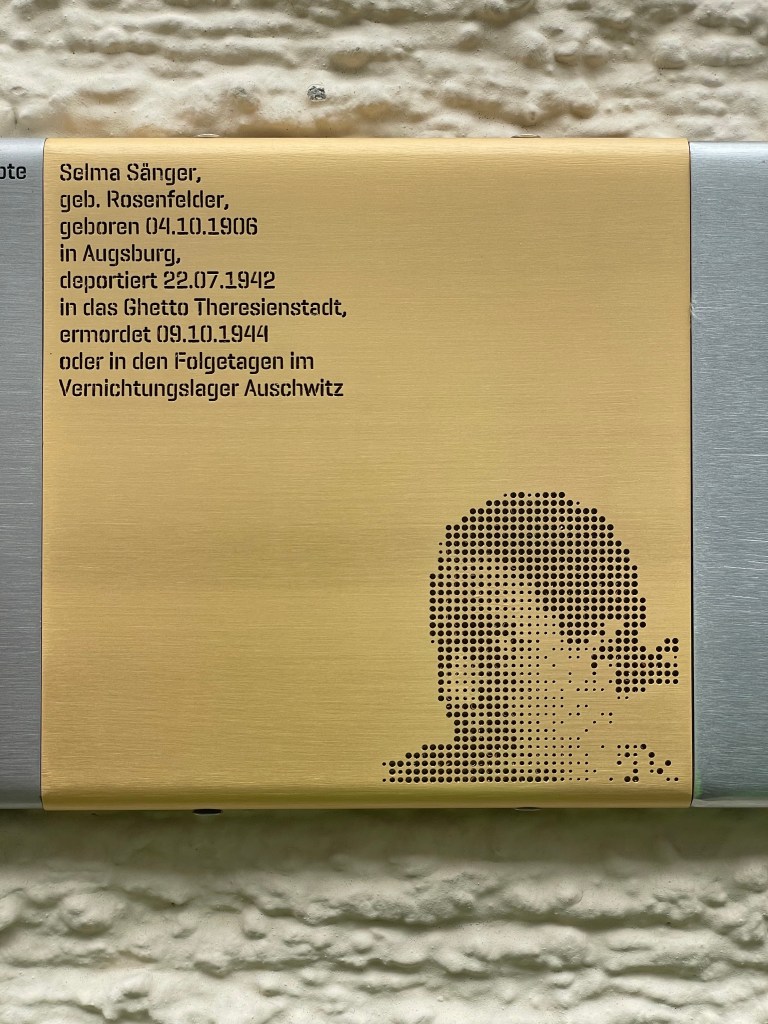
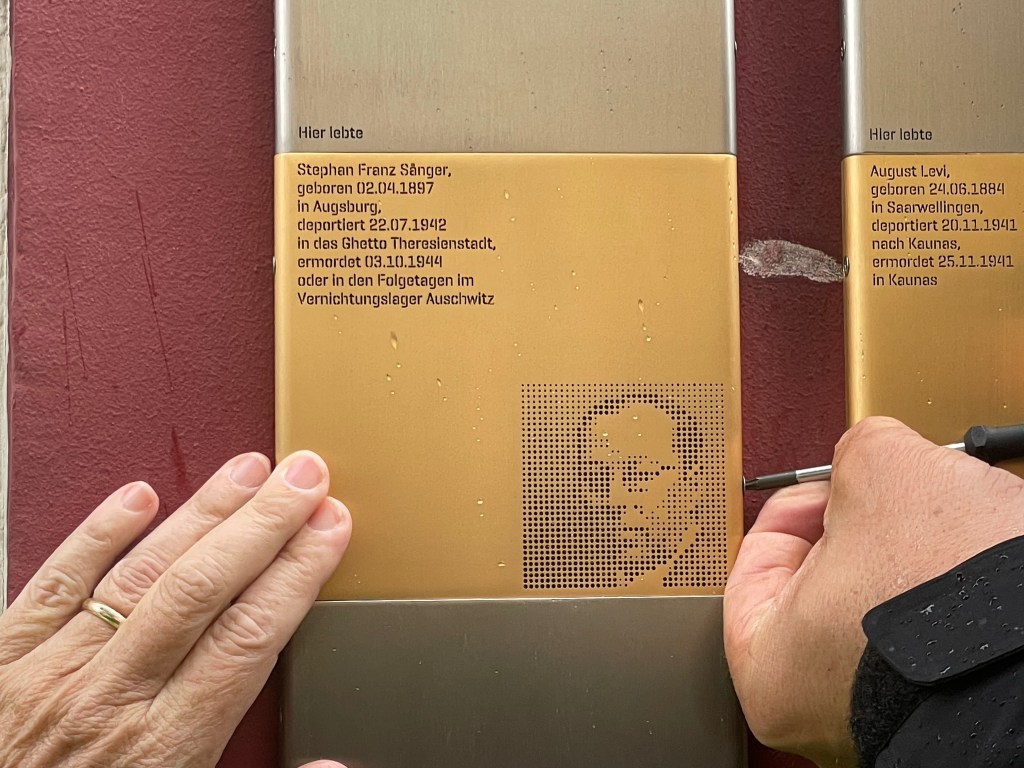
We proceeded to four locations in Munich to install seven memorials for the Sänger family. Unlike “stumbling stone” memorials installed on sidewalks, Munich authorities decided that the names of persecuted Jews should not be stepped on but should be elevated to eye level.
The Munich memorials include images of the victim and birth and death information. Some memorials were installed on the sides of original buildings if the owner gave permission. If the victim’s residence had been demolished or the owner did not consent, a memorial column was erected on state-owned property. At each location, a police officer stood by, an official representative from the district gave a speech, and I gave a eulogy and thanked our sponsors.

At 2 Haimhauserstraße, neighbors came out to pay tribute. The building’s owners drove two hours from Salzburg, Austria, to honor our family. A tenant welcomed us into her grand old apartment with its high ceilings and spacious rooms; it could have been the Sängers’ home. She showed us a desk, left in the apartment, that might have belonged to our family.
After speaking to the group outdoors, I broke down and sobbed uncontrollably. So much loss, violence, inhumanity, beyond logic. Murder on such a grand scale.
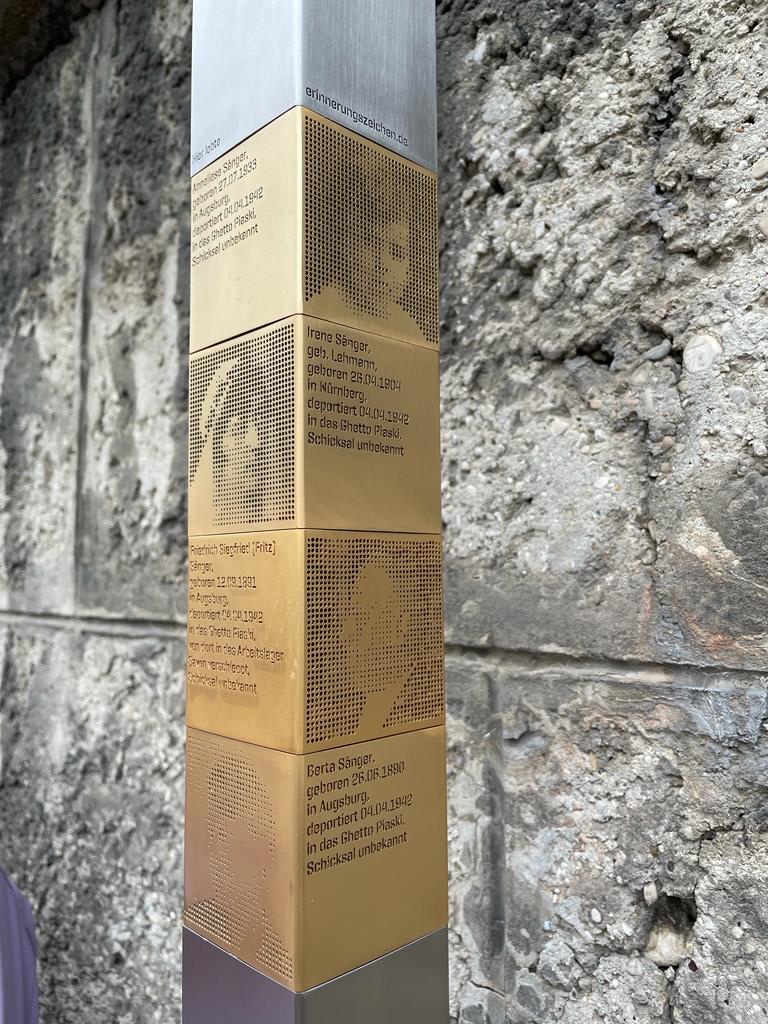
Our closest Sänger relatives were remembered on one column. All were sent to Piaski, a ghetto hellhole. Disease or starvation likely took their lives. Even there, engineer Fritz Sänger worked to improve sanitation and to prevent the spread of typhus. He, his wife Irene, their 8 year old daughter Anneliese, and Fritz’s sister Berta, all died on dates unknown, most likely of starvation or disease.


A local Munich newspaper picked up the story and published two articles in German ://www.wochenanzeiger-muenchen.de/sendling/jetzt-gibt-es-wieder-einen-platz-fuer-sie,152561.html and https://www.tz.de/muenchen/stadt/hallo-muenchen/muenchen-altstadt-gedenk-tafel-erinnerung-kultur-zeichen-leben-holocaust-nazi-verfolgung-92299311.html. Email me for English translations.
This morning, we returned to Nuremberg where tomorrow we will lay a “stumbling stone” memorial for my great aunt.
This afternoon, we decided to tour the ancient beer cellars carved into the sandstone under Nuremberg. No Nazi nightmares this afternoon!
So we thought.
At the cellars’ entrance, a guide explained that the underground rooms had been modified into bomb shelters for German Army officers during WWII.
Along the deep stairway was an American bomb of the sort that destroyed 90% of Nuremberg’s Old City.


Past the bomb shelters, tens of meters underground, I enjoyed learning about beer, geology, and the water table.
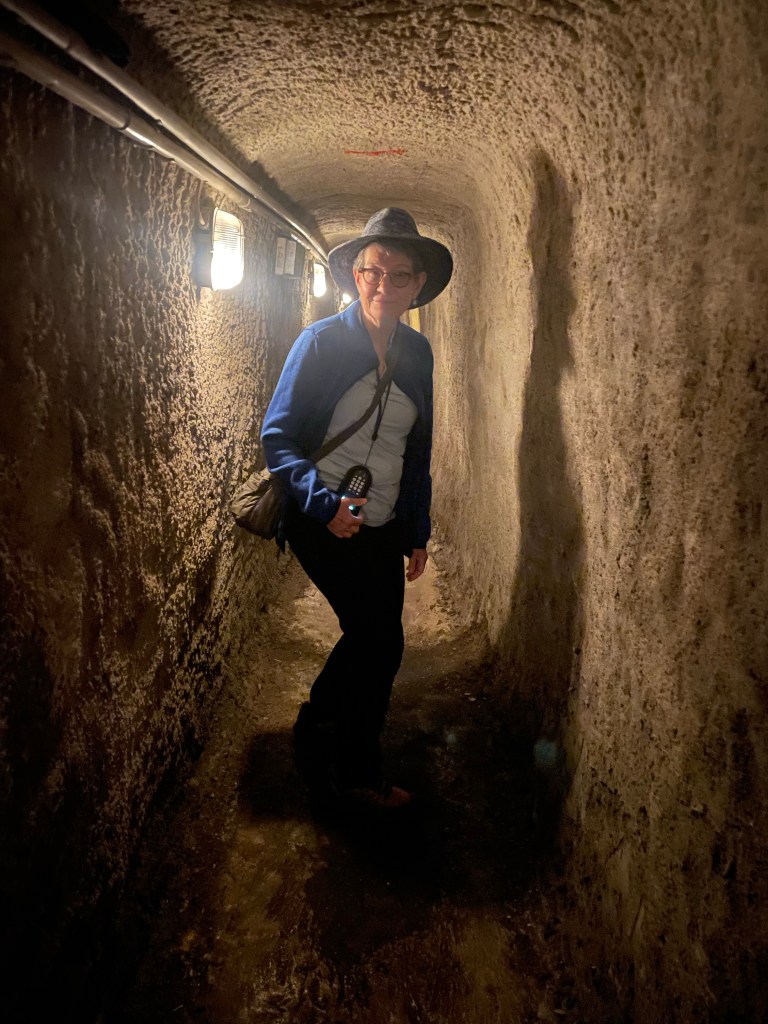
These have been a trying few days. But horrors notwithstanding, the world turns, the beer brews, and life goes on.
A better life, if we work to make it so.
To read prior essays, click HERE.


Leave a comment