Picturesque Miltenberg sits an hour’s drive from Frankfurt along the Main River, where Viking tour boats stop.

In Miltenberg, our friend Ulrike Faust greeted us warmly. Our families have known each for about 100 years, as my two grandmothers (sisters) and their siblings grew up here and attended the local school. My great-grandmother, a smart businesswoman, ran a shoe store solo after her husband died. My Miltenberg based Grünstein family survived WWII, moving from Miltenberg to Haifa or New York before it was too late.
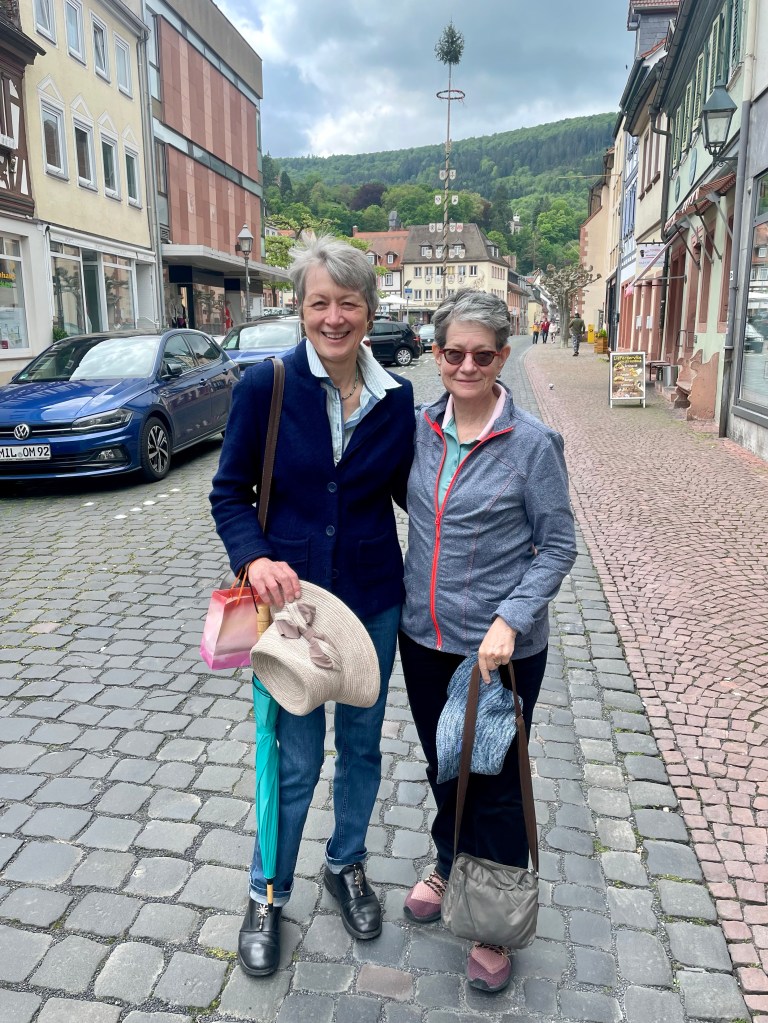
Our strongest family connection is through my Aunt Charlotte. In 1932, at age 9, she saved Ulrike’s 5 year old aunt from drowning in the Main River. The story made the local press. (Click here for details in last summer’s Essay #10.) After WWII, our families reconnected and now we, the next generation, are friends too.
We walked into the gorgeous Wald (woods), a favorite pastime of my parents when they visited their permissive grandma.
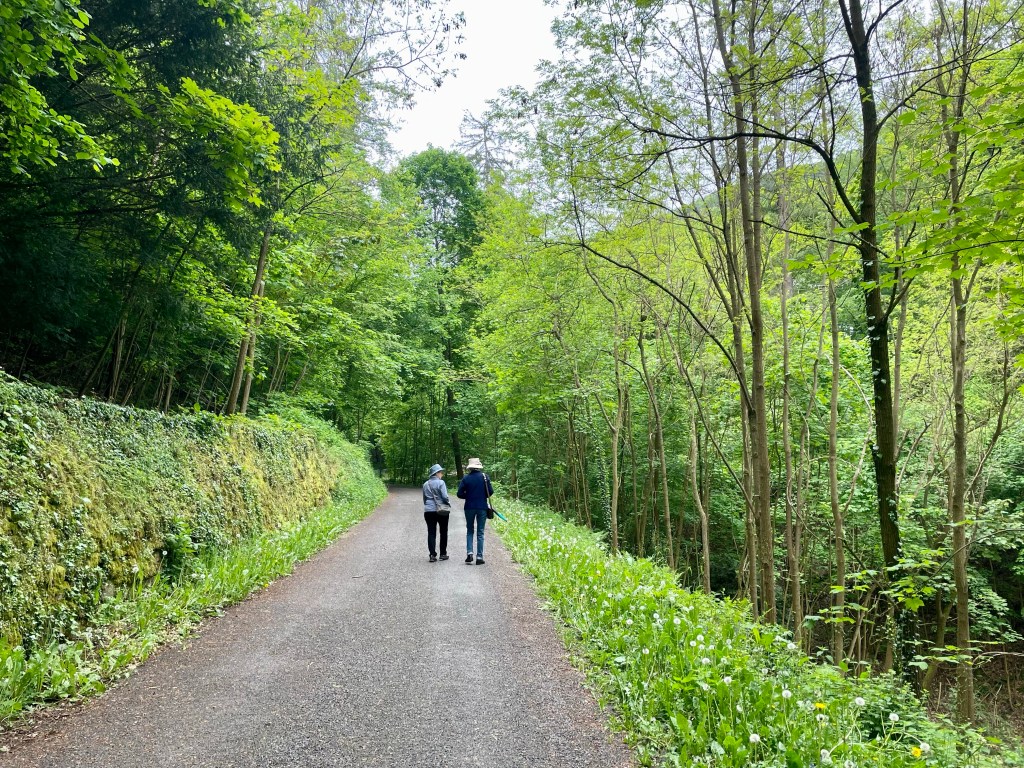
On these trips, I try to imagine the lives of my forebears. My Miltenberg family lived with their non-Jewish neighbors in peace for a long time. Then came WWII, when neighbors murdered neighbors, or looked the other way.
Tikkun Olam (Hebrew for “repair of the world”), means coming to terms with the past and building toward a peaceful future, often one person at a time. The Germans I have met on this trip acknowledge past evils and want to insure they never happen again.
My grandfather Adolf Steinberger said that one can’t live in a country where one has no rights. The Germans whom I call friends understand this. They promote human rights and denounce demagogues.

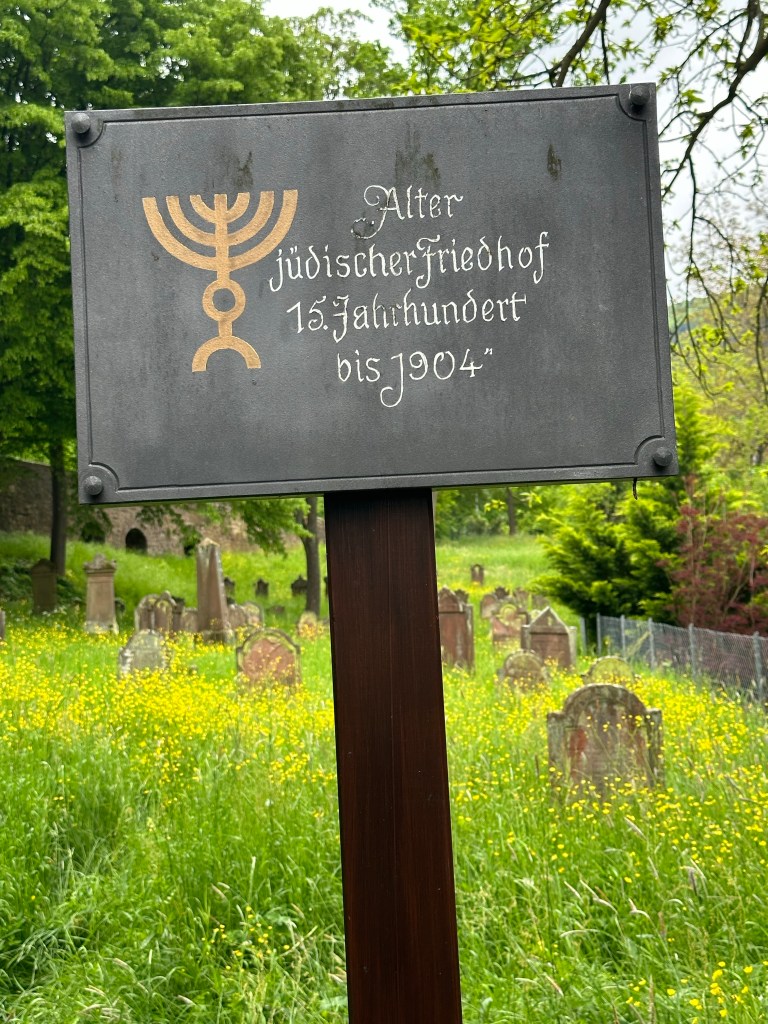
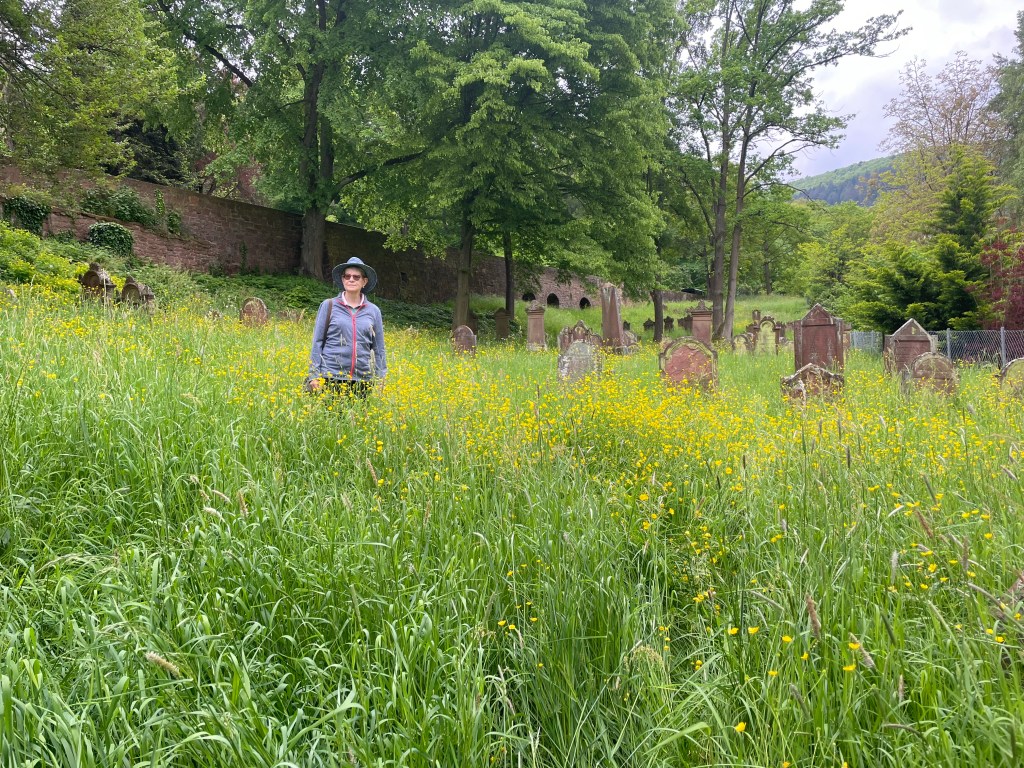
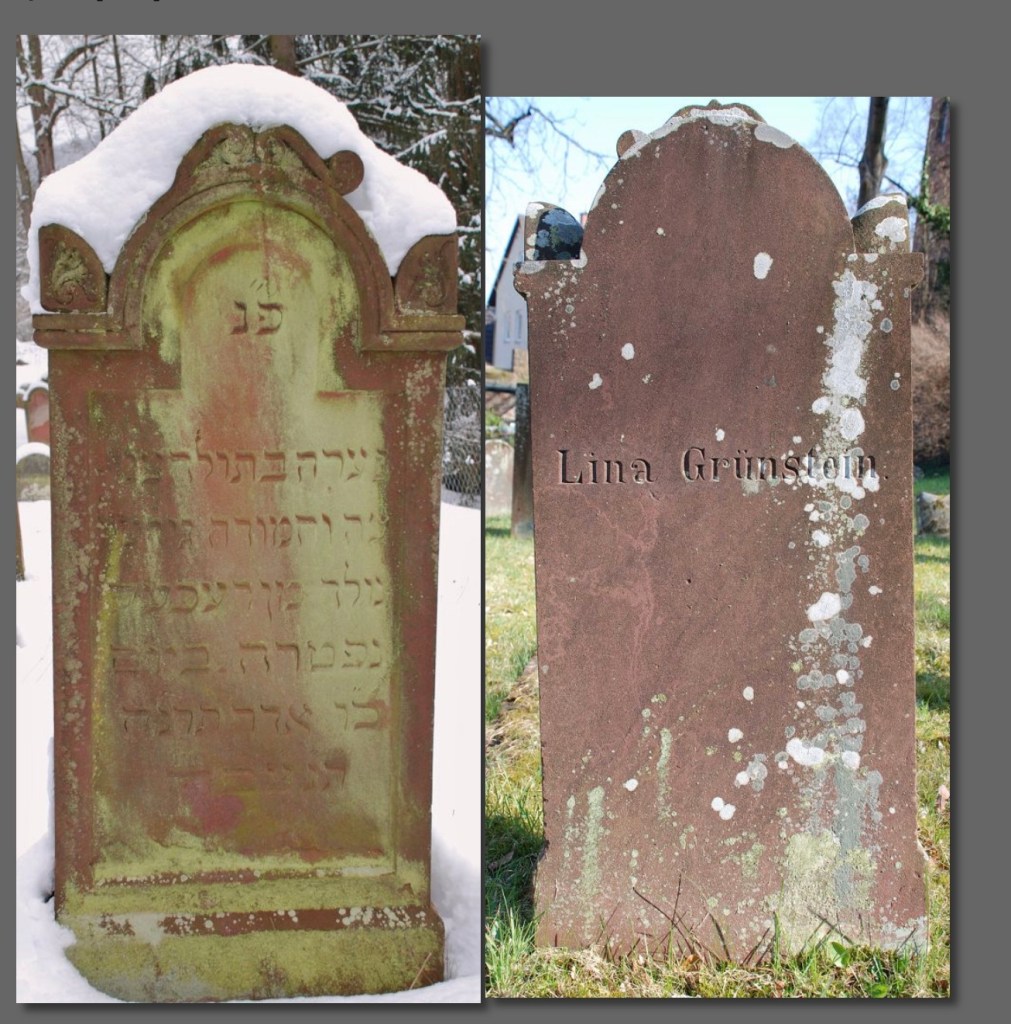
Though we had not planned to go into the old Jewish cemetery, we decided to jump over the fence. My great-great-grandmother and my great-grandfather (among others in my family) are buried here in Miltenberg.
We stopped at the Miltenberg museum. Several Jewish families were highlighted, their humanity shown in the face of their fellow Germans’ inhumanity. The museum displays a few Jewish ritual objects, some of them broken. I was left wondering what exiled or murdered family owned them and how they came to the museum.

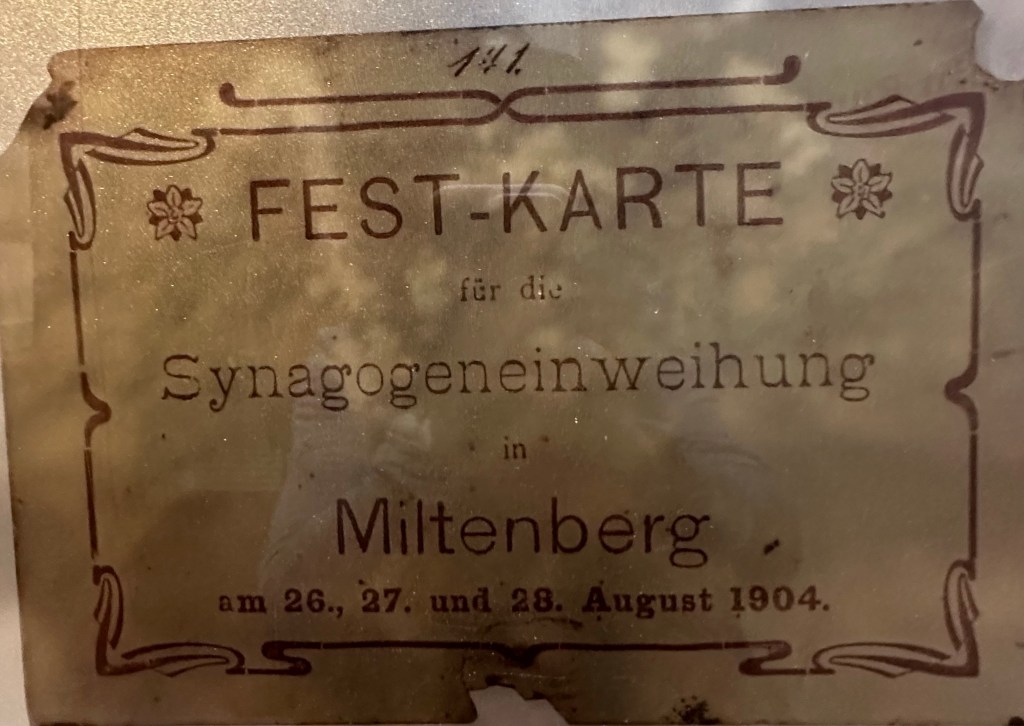
I found it interesting that the whole town was invited to the dedication of the new synagogue in 1904. My family must have attended the ceremony. They were gone when their neighbors burned it to the ground in 1938.

Ulrike prepared a fabulous lunch! She introduced us to some of her family. We had a wide ranging conversation and quickly realized that we share views on the importance of human rights.
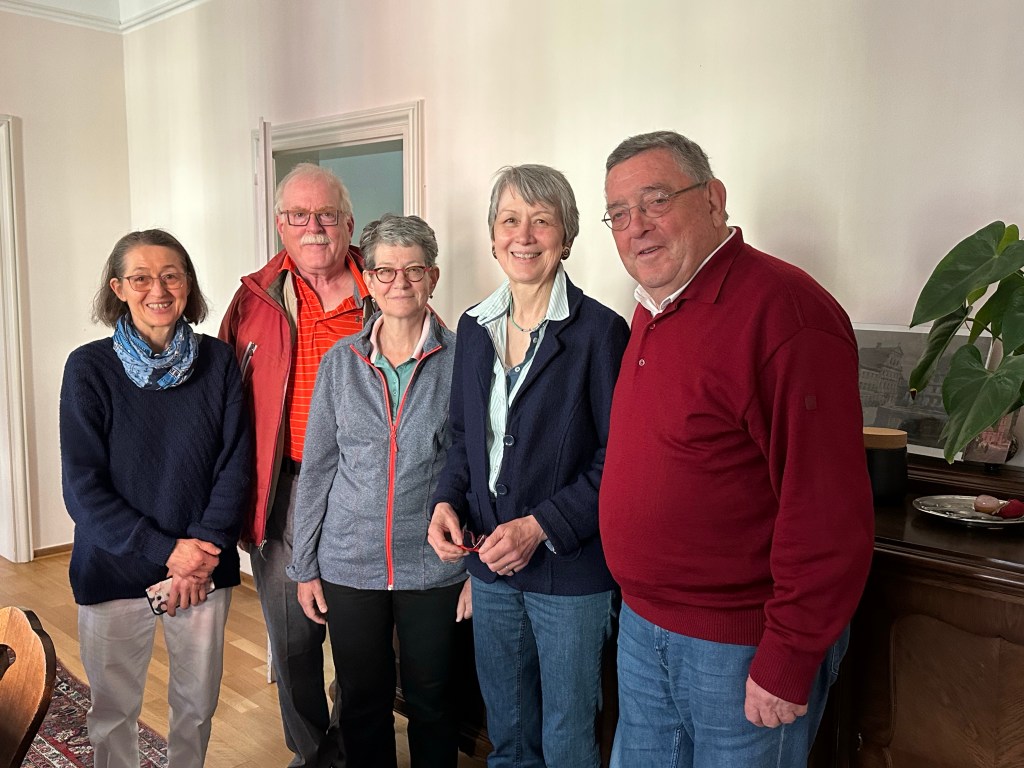
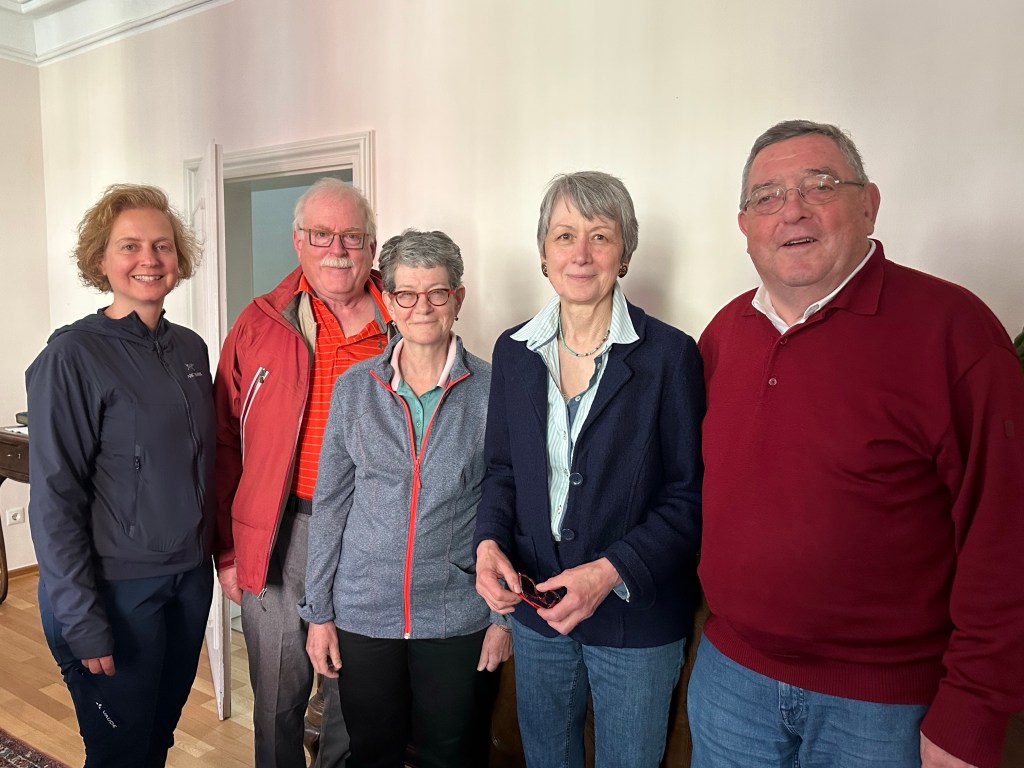
Gesine, Jeffrey, me, Ulrike and Toni
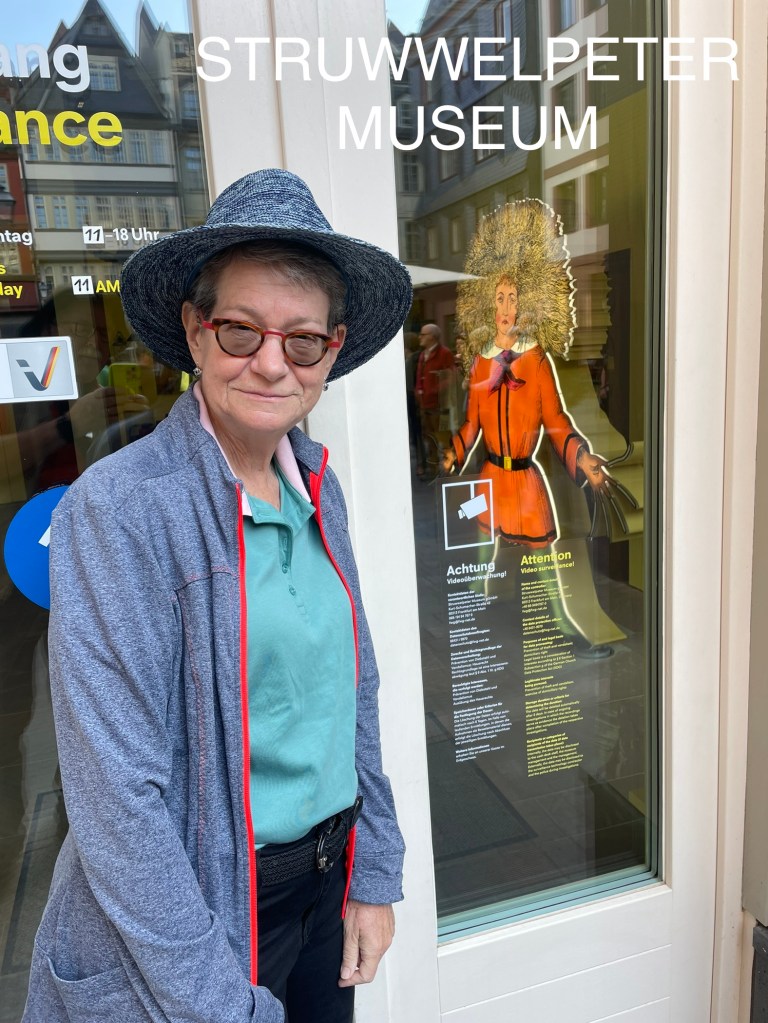
I need to add, that this morning, before we left Frankfurt, we stopped to peer into the Struwwelpeter Museum. Anyone with German parents will recognize these dreadful stories. If you have no idea what this is, look HERE.
We had another day to remember, a day of friendship (Freundschaft) for which we are grateful. But always in Germany, we feel the sadness of loss; the removal from Germany of our family, our people, our culture.

No Jews live in Miltenberg today.
To read prior essays, click HERE.


 Germany: Roots & Remembrance
Leave a comment