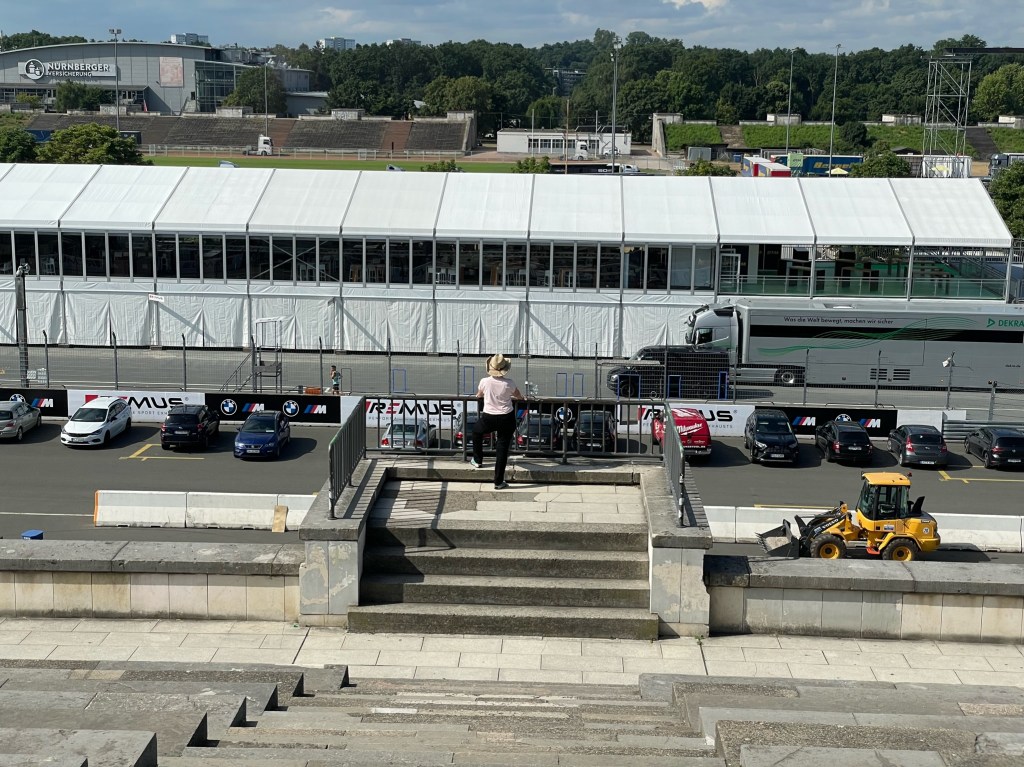
Zeppelin Field was the site of the Nazi’s biggest rallies and where we started our day on Wednesday. It was chilling and brought tears to my eyes as I stood on the same platform where Hitler roused hundreds of thousands of stiff-arm saluting Nazi supporters. The stadium design was based on the ancient Greek Pergamon Altar and was originally topped with a towering swastika, which was blown up by the U.S. Army after capturing Nuremberg in April 1945.
Click here to watch a video of its destruction.
Clowning around or gesturing on the platform is illegal. While the Nazis rallied, the Nuremberg Jewish population would lock their doors, close their window shades and stay home. When the rallies took place, even before Hitler took power, my father often was sent to his grandmother’s house in a nearby town. Mixed with my fear and sadness was a little triumph: Hitler and his murderous empire were destroyed, and I, a Jewish woman, stood free atop his ruins.
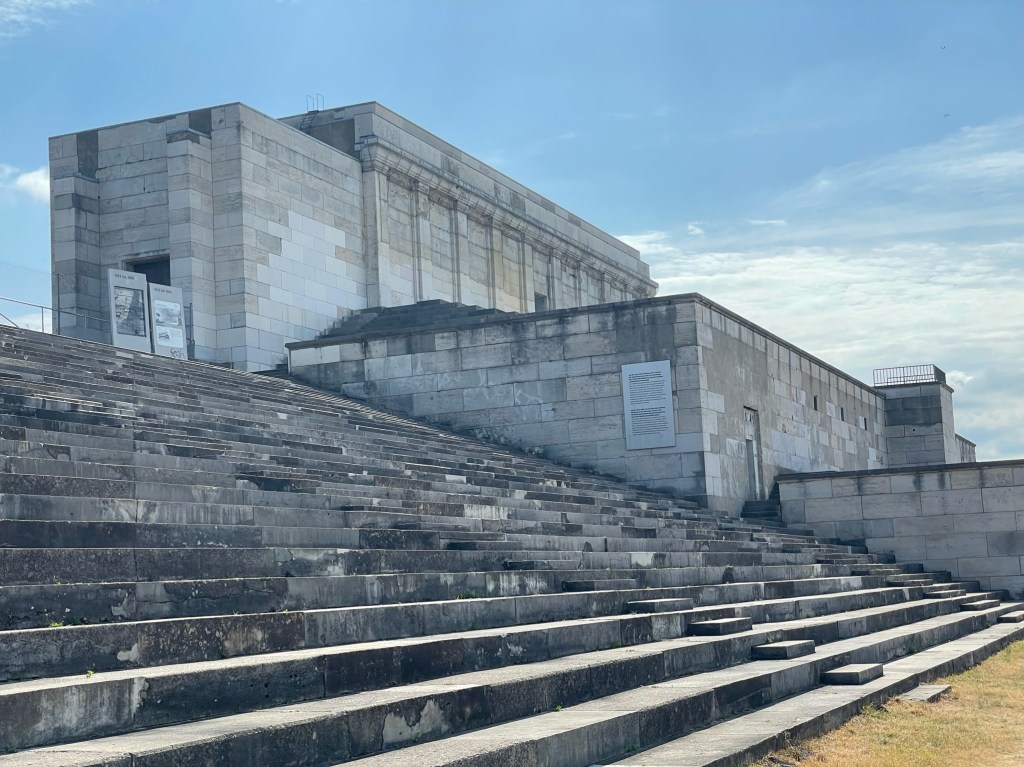
We then drove to Aschaffenburg where we met my pen pal and friend, Iris, with whom I have lively email conversations. She has been hugely helpful in my genealogy work. She’s a person of thought and ideas, a wonderful tour guide, and an outstanding cook.
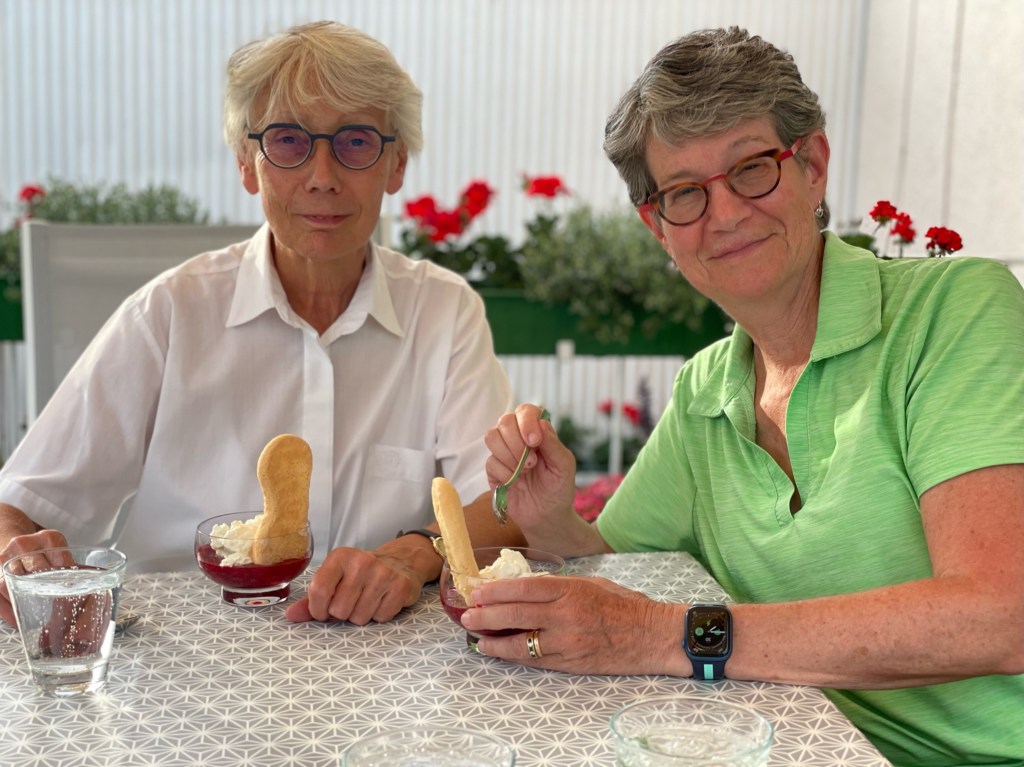
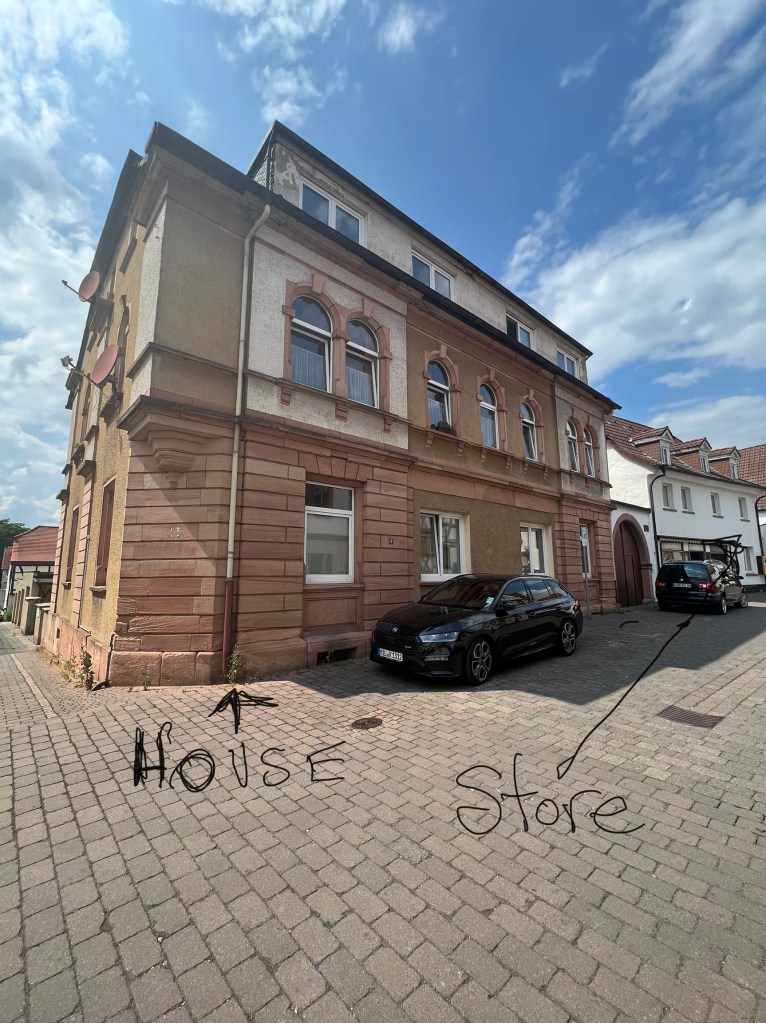
Our first stop was Kleinwallstadt (“small walled city”), the city to which the Freund family traces its roots to 1773. My great-great-grandfather, Liebmann, was a prosperous businessman who ran a dry goods store and raised a large family in a big house next to the business. Liebmann also was a leader of the Jewish community.
Standing in front of where my forebears lived brings the family history to life. I imagine meeting my relatives and get a feeling of the times. Jews from this town had to schlep miles uphill, following a horse drawn carriage, to bury their dead in the nearby town of Obernau.
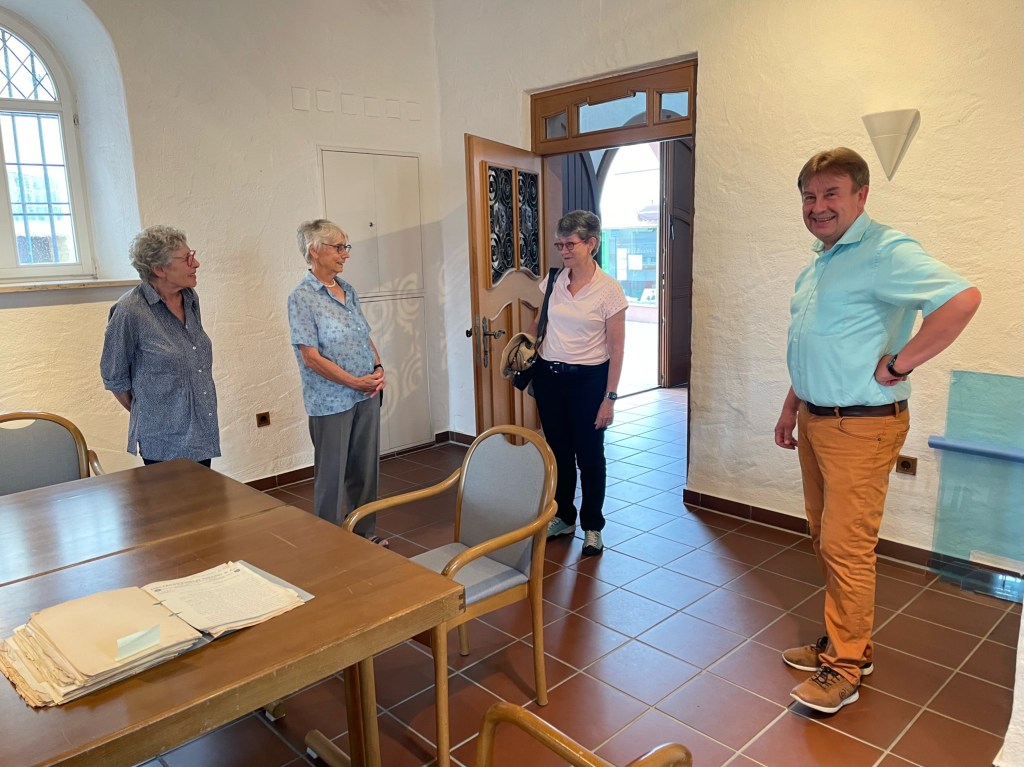
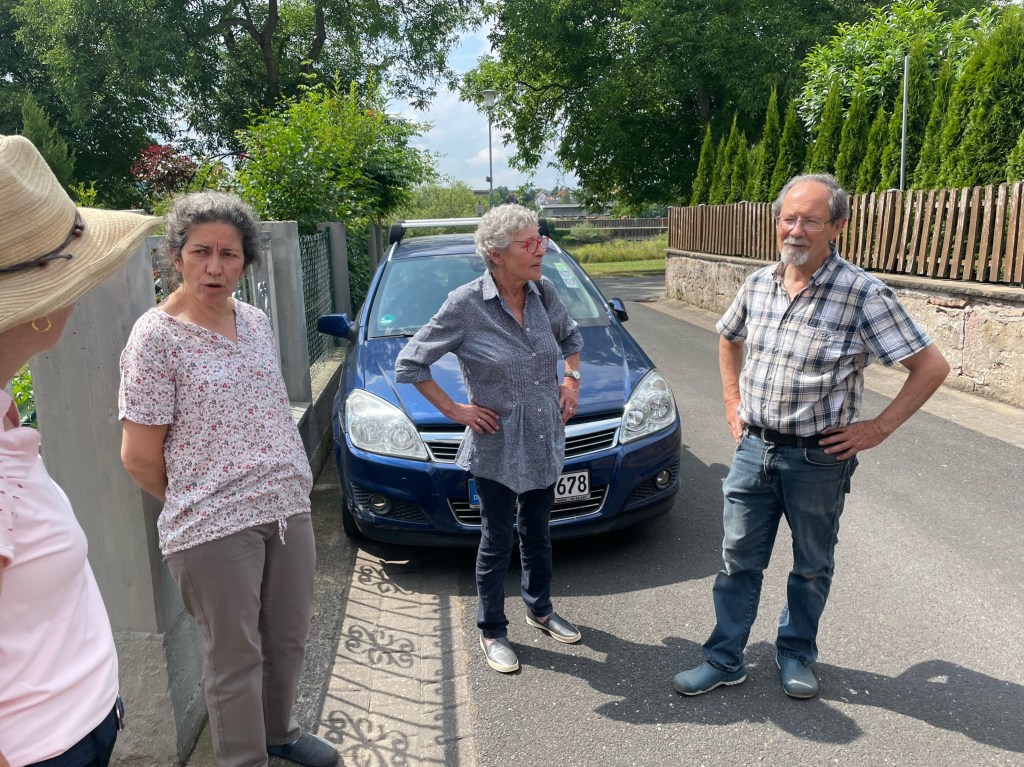
The mayor (Bürgermeister) of Kleinwallstadt welcomed us warmly and introduced us to a musician and accountant, Achim Albert, a history buff who on his own time has been documenting the Jewish history of Kleinwallstadt for 35 years. He is dedicated to remembering the Jewish famiies and history and we were impressed and grateful to him. Achim showed us a document signed by my great uncle in 1917 regarding the costs of electrifying the Catholic church in town. Interestingly, this uncle used his engineering expertise in Chicago after he emigrated to the USA.
Achim walked us to Liebmann’s house and business. Today the house has six apartments. We could see holes in the doorposts where a mezuzah once hung.
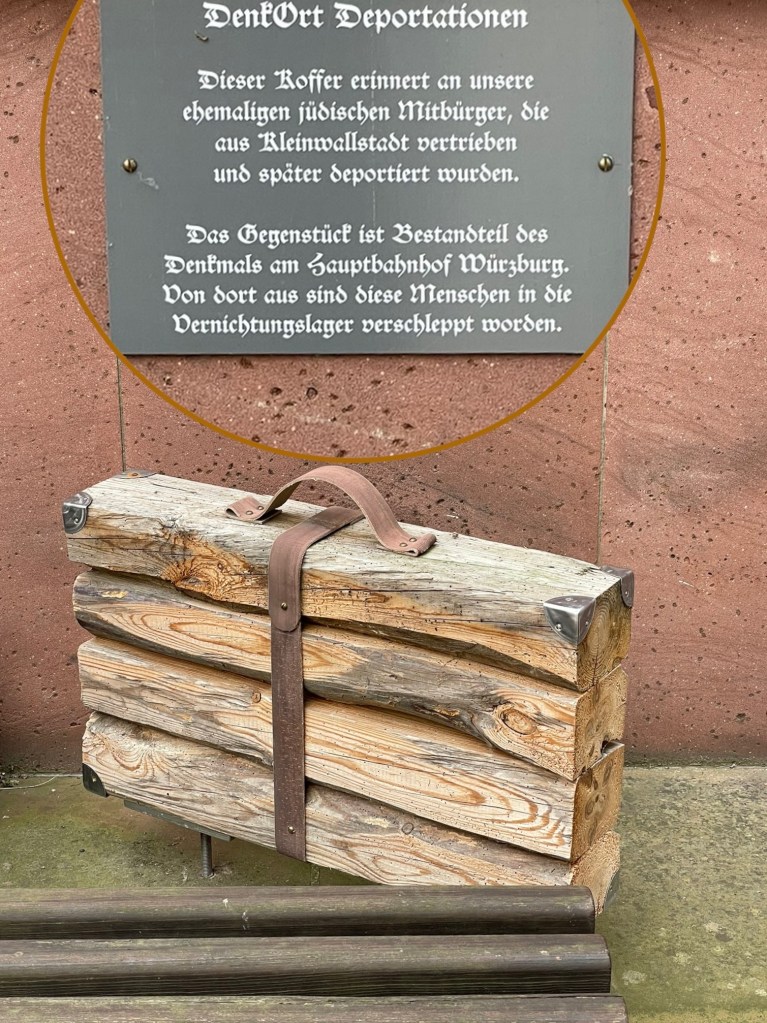
Just outside the Rathaus and is a memorial to the Jews of Kleinwallstadt. A suitcase at a fountain symbolizes the expulsion and murder of the Jews who remained in the town after Hitler came to power.
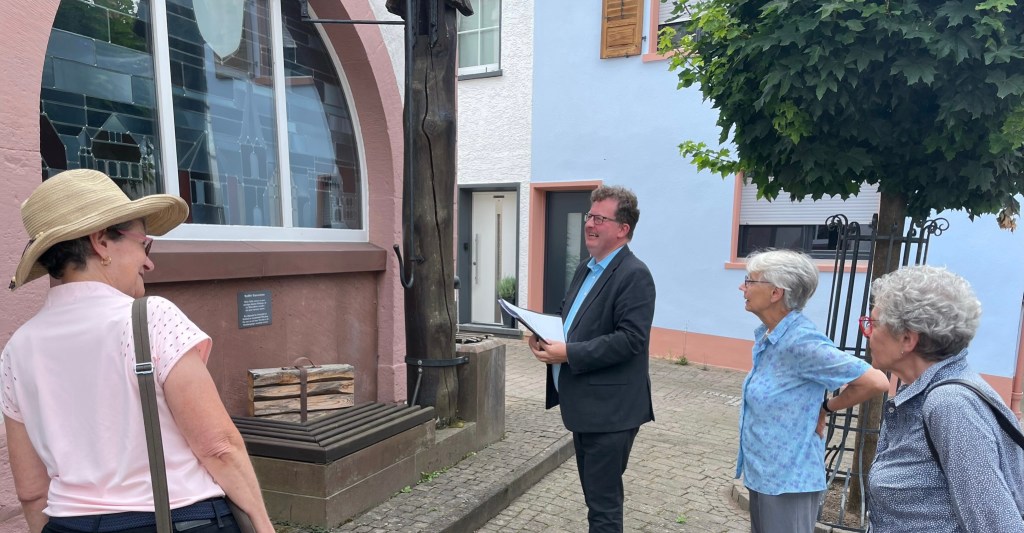

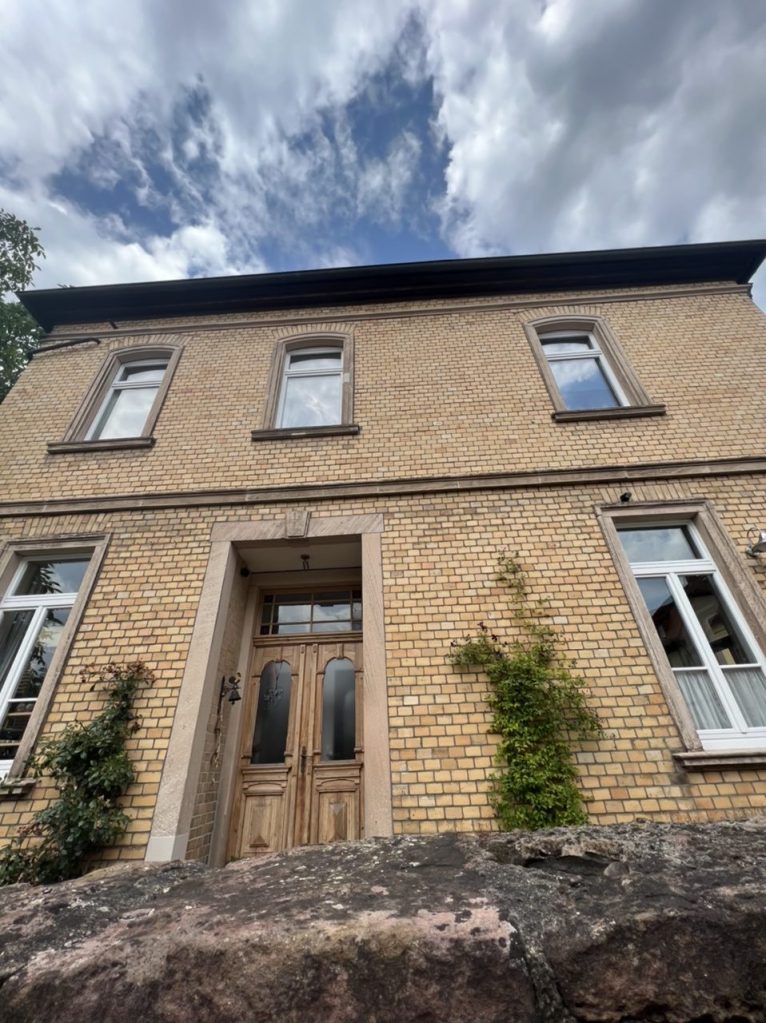
We walked past the building that housed a Jewish day school from 1899-1917 and saw a contract signed by Liebmann Freund on behalf of the Jewish community to rent an apartment with heat (a big deal) to a Jewish teacher who was hired to educate up to 14 students. There still is Hebrew above the door.

Before the Nazi era, Jews were well integrated into the Kleinwallstadt community. Achim gave us an example: Jewish and Christian butchers would share cows, the kosher butcher using the kosher parts, and the non-kosher butcher using the rest.
The Kleinwallstadt synagogue was not burned down on Kristallnacht (November 9, 1938) because the last Jews had just left town and the building had been ”bought” by a non-Jew. Achim knew when the last Jews left because the new mayor at the time, an enthusiastic Nazi who wanted the town to be ”Jew-free”, posted the number of Jews living in town on a placard at the railroad station. Just before Kristallnacht, the number was reduced from two, to zero.
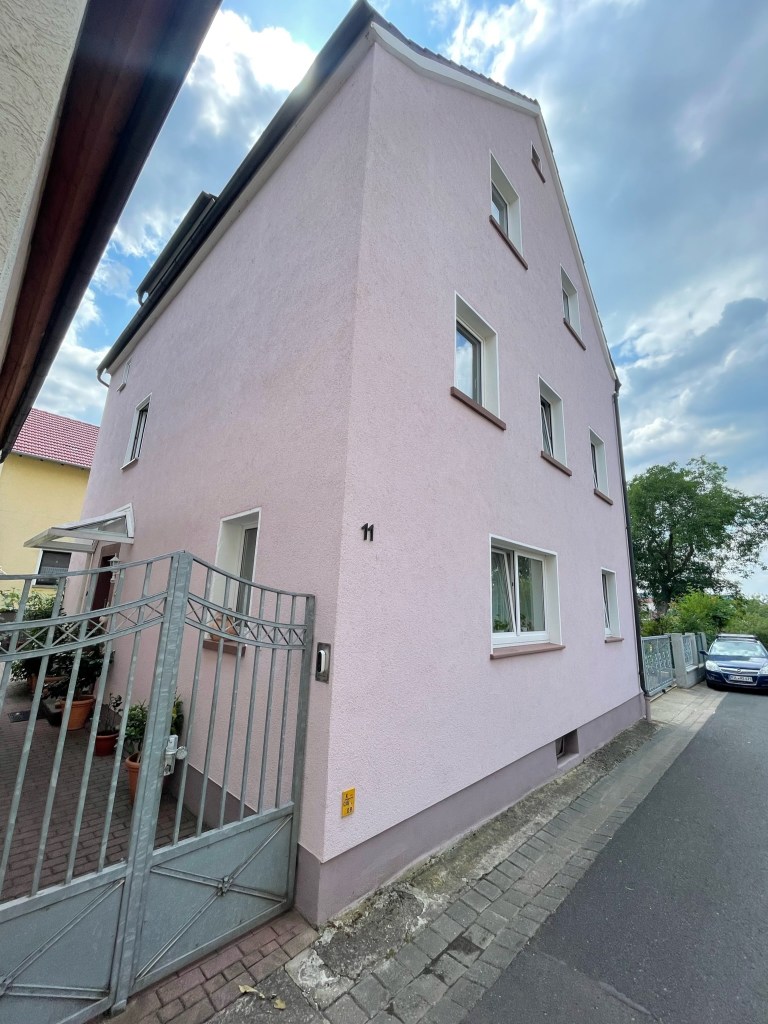
We met the current owner of what had been the synagogue, the son of the man who ”bought” the building as the Jews were running for their lives.
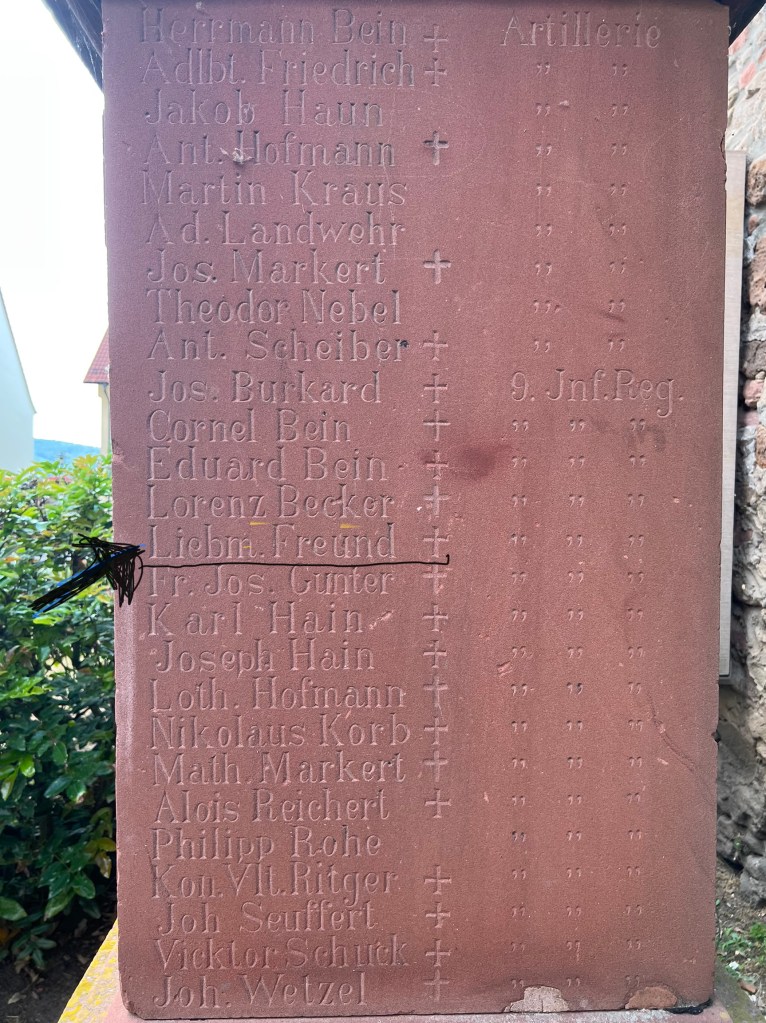
My great-grandfather served as a soldier in the 1870-71 Franco-Prussian War. His name is on a stone monument with other soldiers from Kleinwallstadt.
To stand in front of the house where my Freund great-grandfather and his family lived, the synagogue where he prayed and school where he sent his children was emotional. My grandfather went to that school as a child. This is where my Freund family comes from.
We ended the day Aschaffenburg (A’burg for short) where Iris treated us to a tour. As it is getting late here in A’burg, I will write about A’burg and our trip to Reichelsheim in my next post. Bear with me as I fall behind.
But first a coincidence. The City Hotel in A’burg where we are staying is at Frohsinnstrasse 23. Iris has a 1922 phone directory from A’burg showing the Brother Freund clothing factory at Frohsinnstrasse 25! Assuming the building numbers haven’t changed, I write this next door to the store that two of my great uncles managed. It kinda blows my mind.

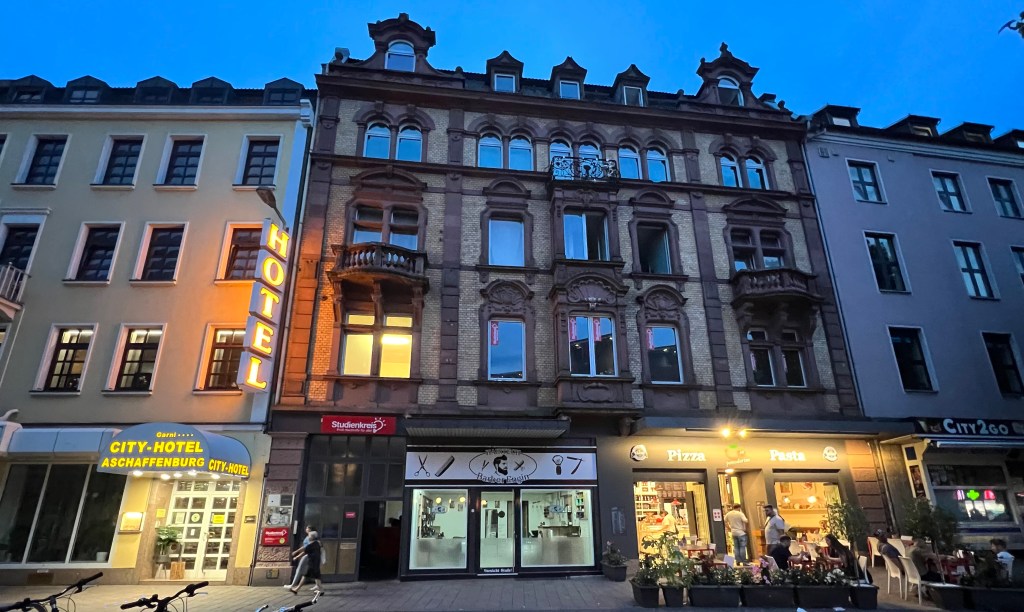
To read prior essays, click HERE.


 Germany: Roots & Remembrance
Leave a reply to Peter Griffith Cancel reply