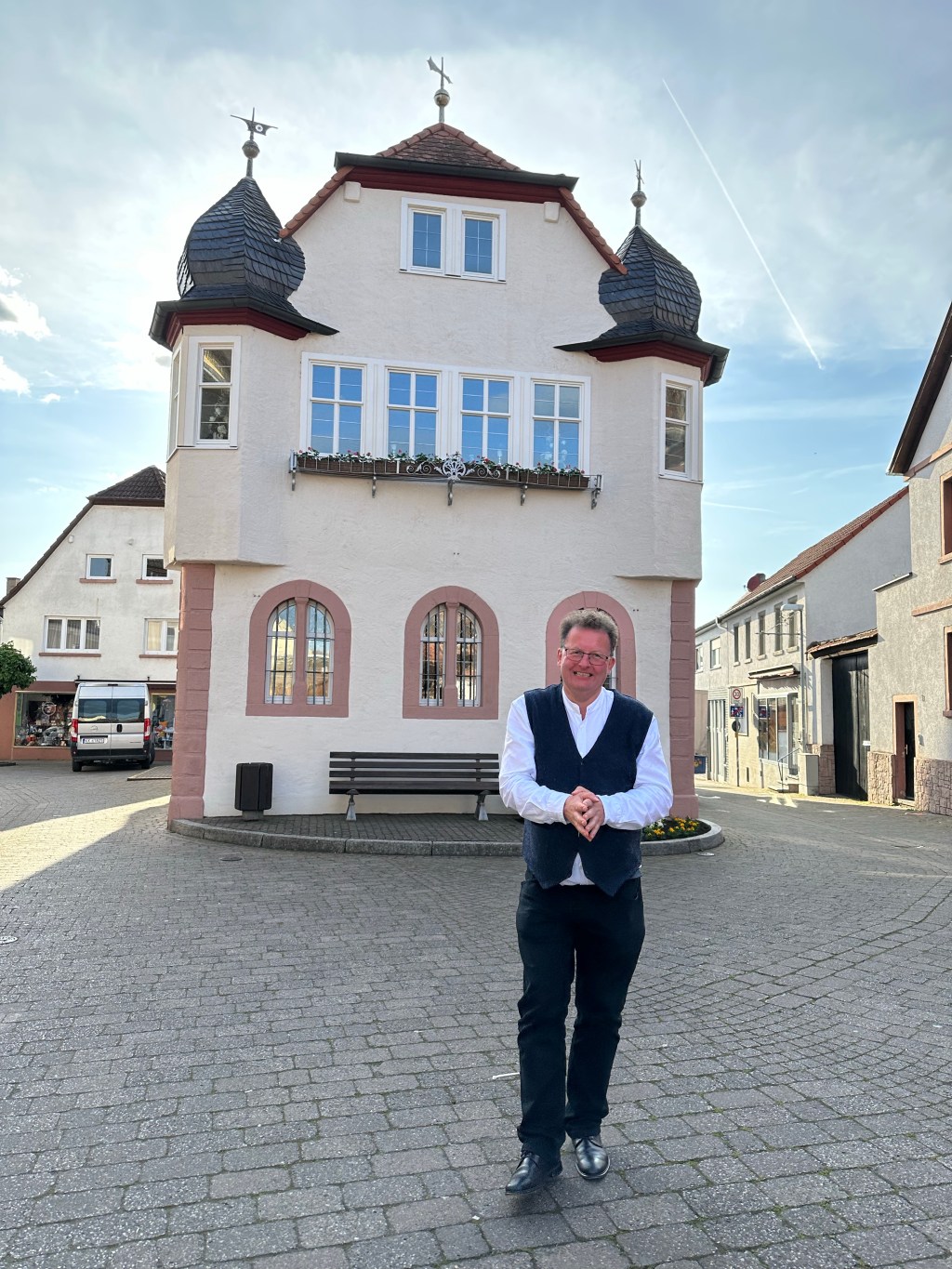
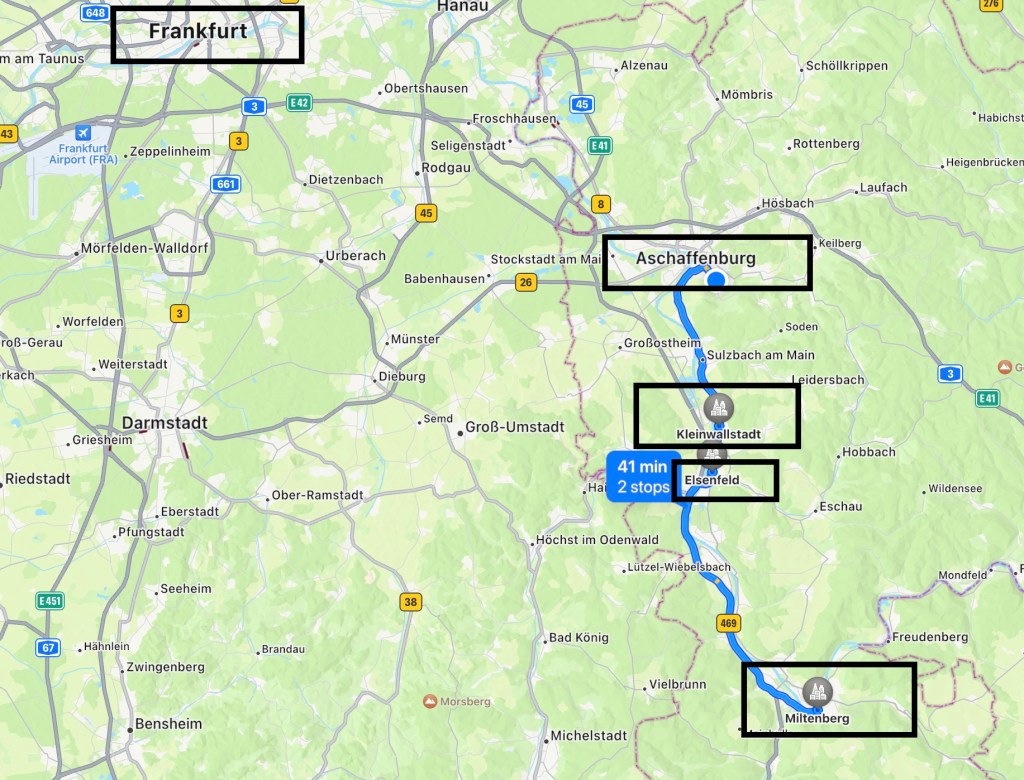
It was just a half hour drive from last night’s stay in Miltenberg to Kleinwallstadt.
Kleinwallstadt (population 6,000: “SmallWalledTown”) is where my Freund family lived from at least 1773, when German families began to have surnames. For centuries, the town had a thriving Jewish population. In the late 1890s, my great-grandfather was president of the synagogue and owned a successful dry goods store.
Achim Albert, the expert on the town’s Jewish history, greeted us.

Near Kleinwallstadt is Elsenfeld (population 9,000). These two towns are in Bavaria, the Deep South of Germany.
We might call these beautiful small villages one horse towns, though I saw two horses on the way in.

But don’t be fooled. The high school students in these towns are engaged, respectful, smart and inquisitive.
About 120 students in these towns heard my father via Zoom and me in person speak about the Jews who once lived here and my family’s experience during the Nazi era. Teachers, principals and the heads of each school were grateful for our visit and presentations.
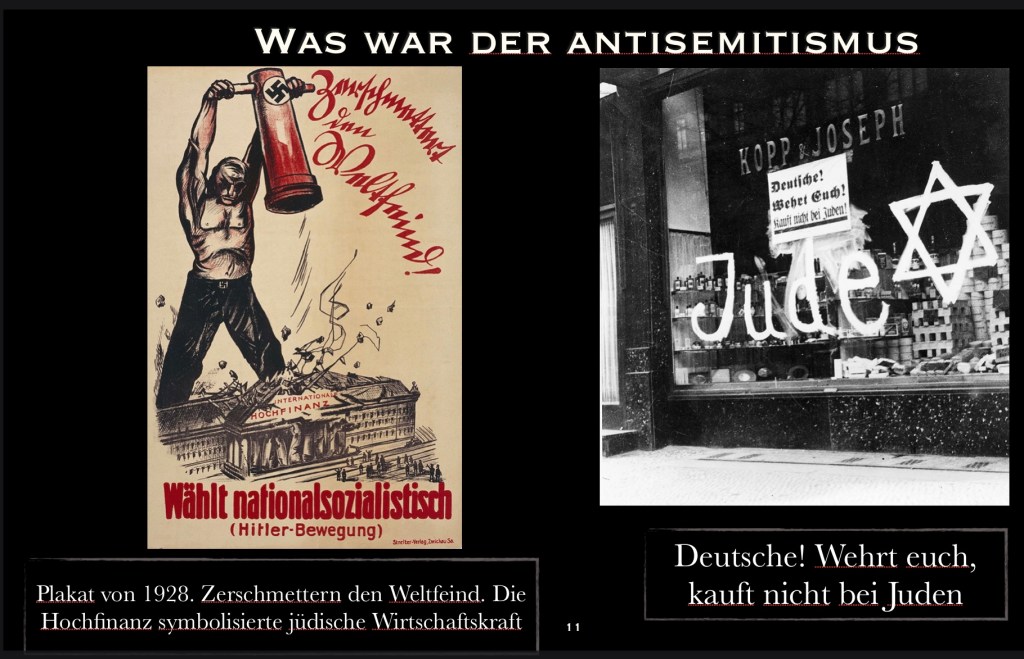
My father spoke about the 1935 Nuremberg laws. Jewish Germans lost their citizenship. Jewish workers lost their jobs. Non-Jews were told not to shop in Jewish stores. Dad was forced out of the public school and had to commute via tram to a Jewish school in nearby Furth. Former friends called him “Jewish pig” and spat on him. Older kids dumped him into a box that held sand used on slippery streets; my dad cried for help until someone lifted the heavy lid. Neighbors marched and sang, “When Jewish blood spurts from the knife, all will be better.” My patriotic German grandfather was arrested and beaten by German officials simply because he happened to be Jewish.
When it was almost too late, my father’s family escaped Germany to safety in New York City. The Freunds who survived dispersed around the globe.
I spoke about my family’s history before and after WW2. I cited the Brain Drain that hurt Germany and benefited the USA. I talked of the Jews from Germany who joined the U.S. Army and whose interrogation of captured German soldiers hastened Germany’s defeat in WW2.

Our description of our family’s deep German roots, persecution and exile left some of the students in tears.
The students wanted to know what life in America was like for my father. They asked whether I ever would consider moving to Germany.
These presentations were made possible by our friends Achim and Ronja.
Achim has been studying the Jews of Kleinwallstadt (the last of whom left the town in 1938) for 35 years, since doing a research paper in high school. Thanks to Achim’s research, we met our Freund cousin Chris for the first time ever.
Ronja coordinates programs for the local schools and also completed a project on the Jews who once lived in the area.


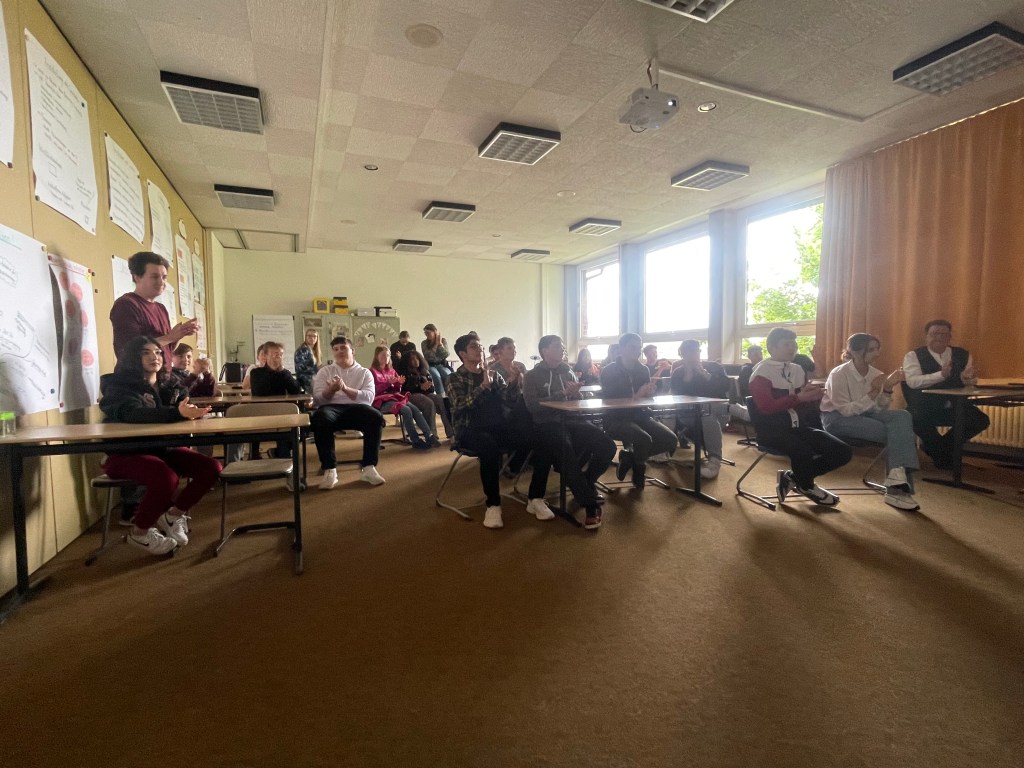

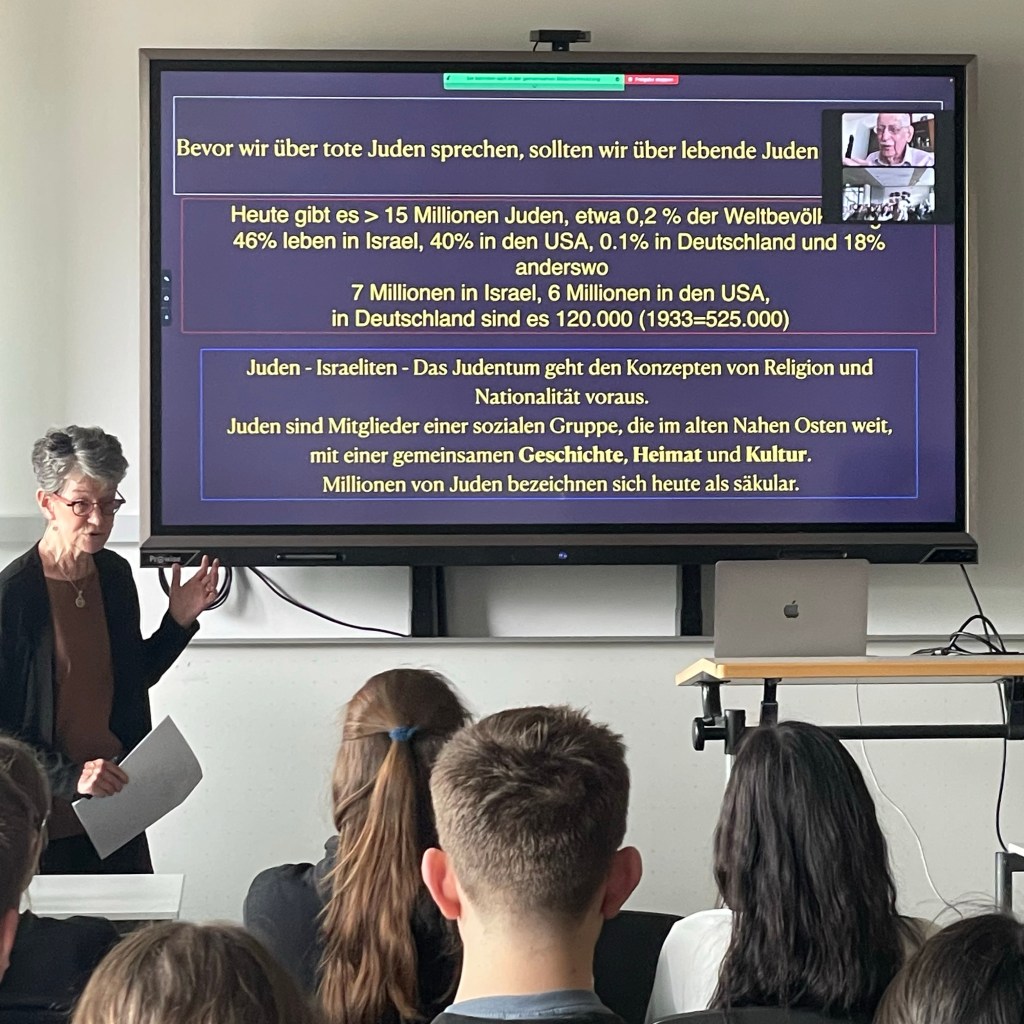
In both towns, we spoke about the Jews alive today, what Judaism is, and that Hitler didn’t invent antisemitism. Our slides and verbal presentations were in German.

On the wall in the Elsenfeld classroom is this sign with words from the Talmud in Hebrew and German: Save one life and you save the entire world.

We Americans can learn from these students who are confronting their country’s history. Our country’s treatment of (among others) today’s First Nations tribes and the descendants of enslaved Americans should command as much of our attention.
After the sessions, Achim treated us to refreshments.
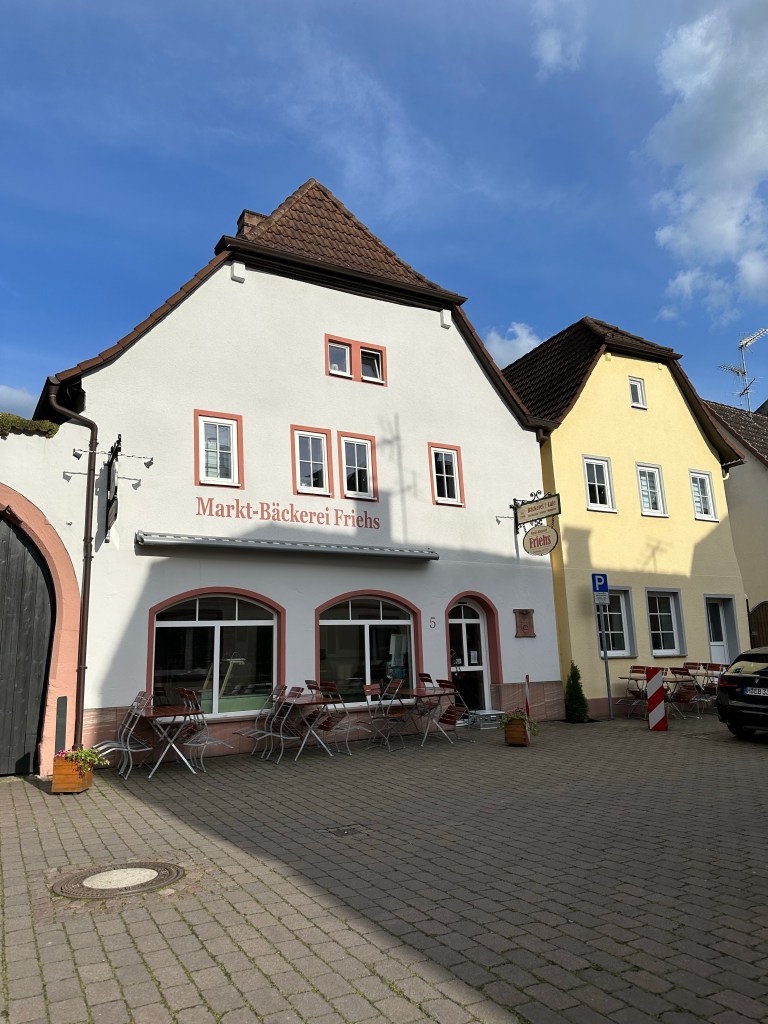
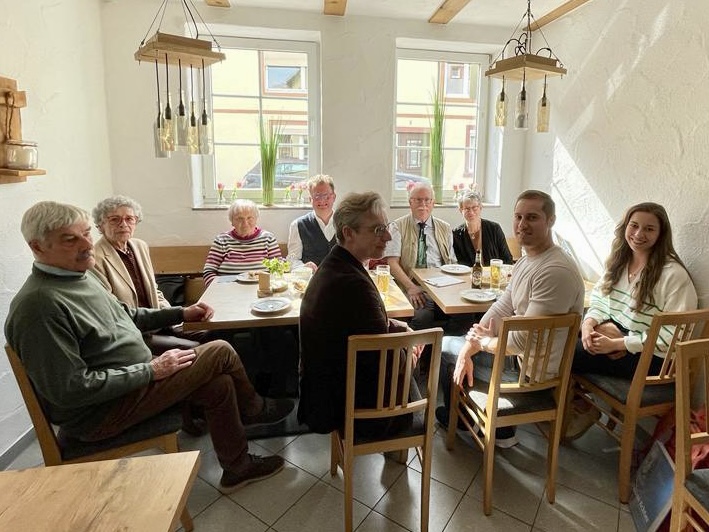
Then he walked with us through Kleinwallstadt to visit houses and businesses, a war memorial and a former school, monuments and a former synagogue—traces of Jewish Germans who for centuries were part of this community until hatred and laws and violence made them disappear.
To read prior essays, click HERE.


 Germany: Roots & Remembrance
Leave a comment